WITH the right investor, the development of Cagayan de Oro City’s reclamation project may be realized in about four years, top officials of the Philippine Reclamation Authority (PRA) told City Hall officials during a recent consultation meeting.
“Let’s cite as an example (the first) reclamation project in Pasay City covering 360 hectares. In 2019, the Pasay City government selected as its joint venture partner SM Prime Holdings Inc. which undertook the land development (and other related works) including the feasibility study for the project. (The development was shortened) from seven years to four years,” PRA Asst. General Manager Joseph John Latiral told City Hall officials during the March 21 consultation meeting.
Latiral said this in response to Councilor Edgar Cabanlas’s queries concerning a ‘ballpark figure’ on the budget costs for the feasibility study of Cagayan de Oro City’s reclamation project.
“Let’s say for 100 hectares (how much would it cost) the city to conduct a feasibility study,” Cabanlas asked PRA officials and in response, they said City Hall may need to spend an initial P2 billion for the feasibility study alone.
Under a joint venture deal, a local government’s private sector partner-proponent will assume 49 percent of the total project site with 51 percent to be shared between the national government and the local government.
When City Planning and Development Office (CPDO) chief Ramir Balquin asked which should come first — master plan or feasibility study — Latiral said the master plan should be prioritized.
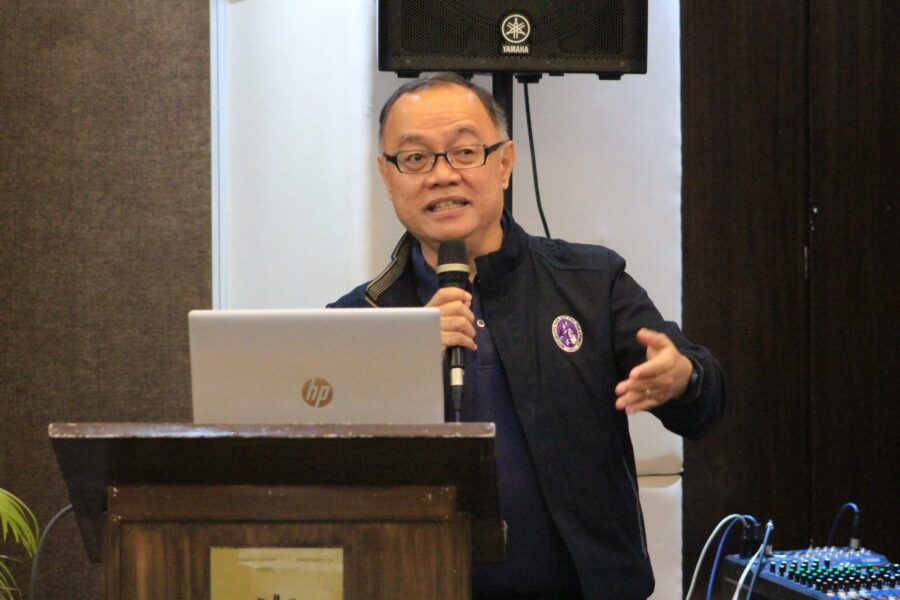
“This is a chicken-or-egg question but for us it’s better to conduct the master plan first for the reclamation project because we need to know (the costing of the land),” Latiral said, adding that development of the road network and open spaces by the private sector proponent will depend largely on the city’s master plan for the reclamation project.
Should the city government decide to pursue its reclamation project, Latiral said it should sign an agreement with the PRA which would then supervise and monitor the implementation of the reclamation including its master development plan, land use and allocation plan, and other related activities and studies involving the project.
“I imagine that City Hall will create its management team (for this purpose),” he said.
Considering the enormity of both the financial and technical requirements of the city’s proposed reclamation project, Latiral said the City Engineering Office should be tapped along with local technical consultants.
“For this project, in order to do it right, the city should choose a proponent with a proven track record and has resources at their disposal (to implement the project),” Latiral said.
In his opening message Councilor Cabanlas, who co-chairs the City Reclamation Authority with Cagayan de Oro City Mayor Rolando ‘Klarex’ Uy, said aside from the environment and the affected fisherfolk, time also poses a serious challenge to the reclamation project which would cover submerged areas along the city’s coastal highway.
“(Thankfully) we have the time to fast-track this project. We don’t have to reinvent the wheel, we will copy what the other cities have done. If it took them 20 years like what happened in (Cebu City’s South Road Properties), I think with their experience we can input that in our project…it starts as a big dream but the city government together with the national government (we can do this),” Cabanlas said. (Stephen Capillas of City Information Office)