VULNERABLE sectors in Northern Mindanao continue to struggle despite government reports of economic growth, leaving many individuals in dire financial situations.
The disconnect between government reports of economic growth and the actual experiences of many sectors highlighted the challenges faced by many individuals in Northern Mindanao.
Despite statistical improvements, the financial strain on those in the service sector continues, casting doubt on the extent of the reported progress.
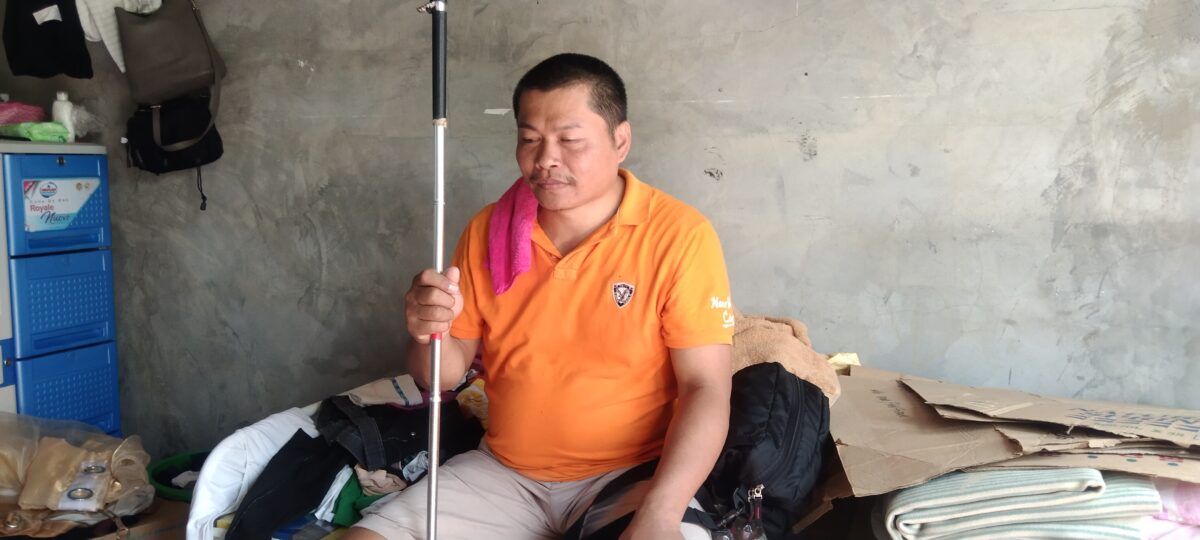
Mariano Abasolo Pilaryon, a blind masseuse, shares his ongoing difficulties in making ends meet due to a lack of clients.
Pilaryon said the fear of contracting Covid-19 has led to a decrease in his customer base, leaving him with an average of only two full-body massages and one half-body massage per day.
Before Covid-19 wreaked havoc, he gave an average of five full body massages every day.
On May 5, the World Health Organization (WHO) officially declared an end to Covid-19 the global health emergency, a significant milestone after the virus killed more than 6.9 million people, wreaked havoc on the global economy, and left communities worldwide grappling with its repercussions.
Despite that, Pilayron’s average daily income is insufficient to support himself, especially after he underwent major surgery three months ago.
Despite his challenges, Pilaryon expressed gratitude because some clients occasionally provide him with rice.
Before the pandemic, Pilaryon said he had to cough up at least P2,400 per month to pay for his rent and utility bills. In 2022, however, together with his spouse, they were able to avail themselves of the free government housing program in one of the upland barangays.
Still, Pilaryon said his family struggles with daily living costs and transportation expenses. He currently earns an average daily income of P300, barely enough to break even and a far cry from his daily average income of P1,250 in pre-pandemic times.
He said the announced growth in the local economy was only for large businesses, while individuals like him in the service sector continue to face financial hardships.
Julius Huerbana, another resident struggling to survive, shared a similar story. His family's sari-sari store, their only source of income, was forced to shut down because of the pandemic, and they have been unable to recover since.

“The prices of commodities I sell in retail have all gone up. How can I profit? If I pad the prices in my store, nobody in the neighborhood would be able to afford them,” Huerbana said.
The 49-year-old Huerbana now delivers drinking water in his neighborhood for a fee to sustain his livelihood.
Adding to the financial strain, Huerbana said, were his daughter’s college expenses.
“Gamay’ng lihok, bayad dayon,” he complained.
Despite the struggles faced by individuals like Pilaryon and Huerbana, the Philippine Statistics Authority-10 presents a contrasting perspective on the economic situation in Northern Mindanao.
According to the latest data from PSA-10, the inflation rate in Northern Mindanao decreased from 8% in February to 7.4% in March.
The agency attributes this decline to the lower prices of vegetables, tubers, plantains, and bananas.
Northern Mindanao’s economy reportedly expanded by 7.2 percent, surpassing the 6.3 percent growth recorded in 2021.
The service sector, which includes Pilaryon's occupation, registered the fastest growth at 10.1%.
Specifically, accommodation and food service activities experienced a 35.2% increase, followed by transportation and storage at 21.6 percent, and other services with a growth of 10.7%.
People like Huerbana find it difficult to trust these reports, dismissing them as disconnected from the reality on the ground.
Huerbana questioned the accuracy of the reported growth figures, saying he suspected that those who collated the data were unaware of the true situation faced by people like him.
“What growth are they talking about? How can they know the real situation when they are just crunching numbers inside their cozy offices,” Huerbana blurted.
Pilaryon, for his part, said he found it hard to believe the reported growth in the service sector when his financial struggles persisted even after three years.
Cong Corrales is an Aries Rufo Journalism fellow.