ILIGAN City — While families visit cemeteries during Undas to remember departed loved ones, the annual observance also gives cemetery workers like Arjay Cabanlit a chance to earn extra income.
For others, like Nelson Sy, the occasion is deeply personal, offering time to care for the graves of loved ones they continue to remember.
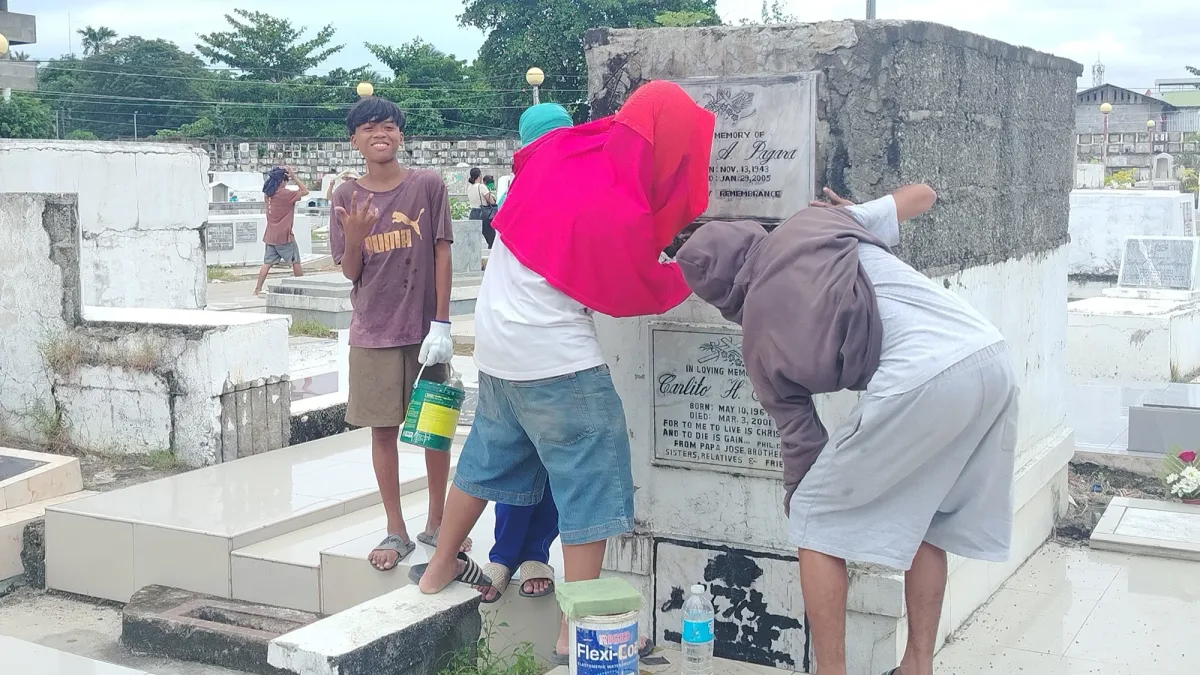
At 24, Cabanlit has spent 10 years working in cemeteries, starting when he was just 14. Now a second-year Criminology student, he cleans tombs, paints grave markers and prints names to help pay for his education and contribute to his family's expenses.
He takes on the work during school breaks and whenever he has free time. While some customers request his services throughout the year, he said demand increases significantly during Undas, particularly on November 1 and 2.
Cabanlit charges ₱250 for grave-marker lettering per name, while three names cost ₱500. Tomb painting costs ₱300. His basic tools include a broom, paint and sandpaper.
His earnings depend on the number of customers, but the Undas rush gives him an opportunity to make more than he would on ordinary days.
One of 13 siblings, Cabanlit helps support his family while pursuing his college degree.
His family was among those affected by Tropical Storm Sendong in 2011. They previously lived in Barangay Ubaldo Laya before being relocated to Barangay Michael's in Buru-un following the disaster.
Despite these challenges, he continues to balance work and studies, hoping to finish his Criminology degree.
For Sy, meanwhile, caring for a grave marker carries a different meaning. He personally cleaned the marker of his two unborn children, making the cemetery visit an act of remembrance for the children he lost.
His gesture reflects the personal stories behind Undas, when families return to cemeteries not only to clean and decorate graves but also to remember loved ones who remain part of their lives.
The experiences of Cabanlit and Sy show two sides of the annual observance: an opportunity for cemetery workers to earn extra income and a time for families to honor those they have lost.
For workers like Cabanlit, every customer helps provide for education and household needs. For families like Sy's, even a simple act of cleaning a grave can carry deep personal meaning.