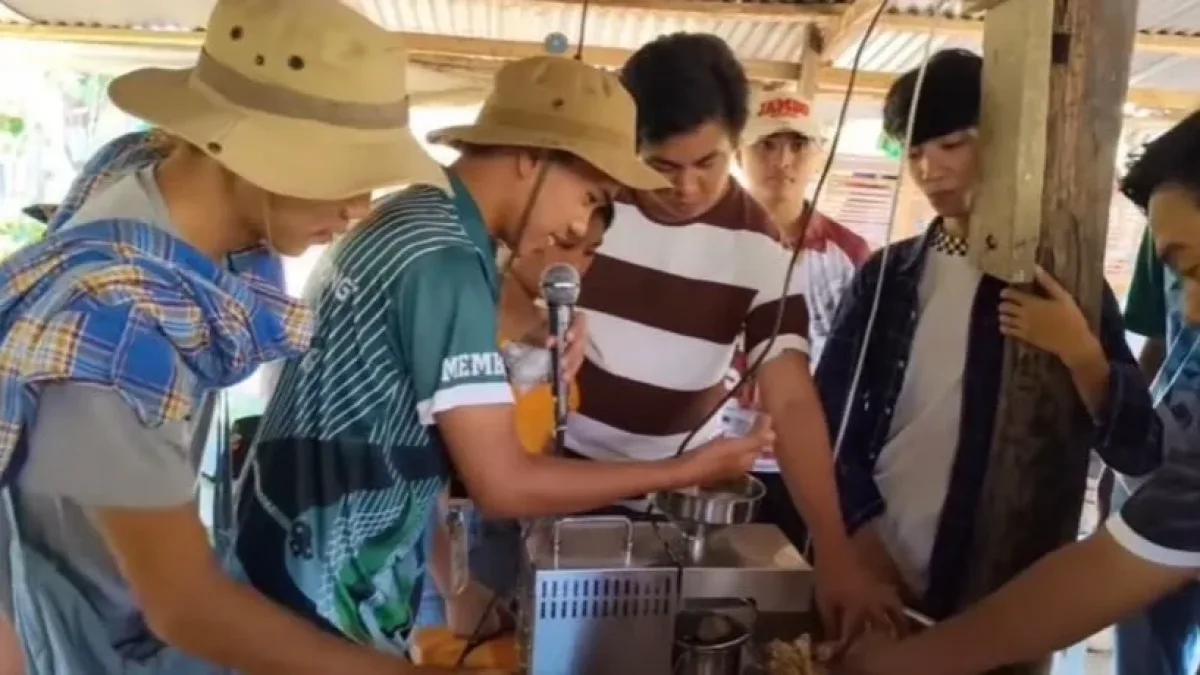
CAGAYAN de Oro City — A business idea can start with something as familiar as the crops growing in one's hometown.
For Vengie Villanueva Mencias, that was peanuts.
Coming from a family of peanut farmers, Mencias saw an opportunity to do more than sell raw produce.
He wanted to turn locally grown peanuts into finished products that could reach more consumers and give farmers additional market opportunities.
That idea grew into Y’Nut Food Products, a North Cotabato-based enterprise that produces peanut oil, peanut butter, peanut flour, peanut crumbs, CrunchNut, and PeanuPolvoron.
Today, the company works with 312 peanut farmers across Region XII, with a potential monthly supply of about 40 metric tons of raw peanuts.
In an interview with Mindanao Gold Star, Mencias shared how the business aims to grow while creating opportunities for farmers and members of the local community.
From farm produce to finished products
Instead of limiting the business to raw peanuts, Y’Nut explored ways to turn the crop into products that could be sold to consumers, resellers, and food businesses.
Processing and product development have become important parts of its operations.
The approach gives agricultural produce additional value while creating a market for farmers who supply the raw materials.
For farming communities, this presents another possibility: their harvest can become the starting point of a wider business rather than ending at the farm gate.
Creating livelihood opportunities
Beyond its products and partnerships with farmers, Y’Nut also wants to provide income opportunities for people in its community.
Asked whether the company employs single mothers, working students, and out-of-school youth, Mencias said it does.
"Y’Nut Food Products aims to provide livelihood opportunities to members of our local community, particularly women, young people, and individuals who are looking for additional sources of income," he said.
"As a growing social enterprise, we believe that business should not only create profit but also open doors for people who need opportunities to improve their lives."
The company's production activities include peanut processing, product preparation, packaging, and labeling.
Mencias said the income workers receive from these activities helps provide additional financial support for their daily needs and household expenses.
However, not all work arrangements are regular.
"Since Y’Nut is still a growing enterprise, our workforce arrangement depends on our production volume and operational requirements," he said.
"Some work opportunities are provided during scheduled production periods, while we continue working toward creating more consistent livelihood opportunities as the business expands."
Mencias also offered to introduce a worker who could share a personal account of how being part of Y’Nut has contributed to their livelihood.
Taking local products to a bigger market
Y’Nut's development has brought its products beyond its home province.
In October 2026, the company joined four other Filipino agribusiness startups at the Asia-Pacific Agri-Food Summit in Singapore as part of a Department of Agriculture-supported delegation.
The event allowed the enterprise to showcase its peanut-based products and connect with potential partners and international stakeholders.
For a startup based in Carmen, the participation opened opportunities to explore markets beyond the local community.
Mencias has also received recognition through entrepreneurship and youth development programs, including the 2023 Young Farmers Challenge Regional Intercollegiate Award and the 2024 Villar Sipag Youth Poverty Reduction Challenge.
Lessons for young entrepreneurs
Y’Nut's experience offers a practical lesson for young Filipinos interested in starting their own businesses: opportunities may already exist in the agricultural products and resources available in their communities.
But turning an idea into a sustainable business takes more than finding a product to sell.
Entrepreneurs must develop products, find buyers, maintain production, and build reliable partnerships with suppliers.
For agricultural startups, processing and product development can help open additional markets while connecting farmers to businesses and consumers.
Y’Nut's journey from a family background in peanut farming to an international agrifood platform shows what can happen when entrepreneurs look beyond selling raw crops.
For Mencias, the goal goes beyond growing a peanut-based food business.
"We hope to demonstrate how a local agricultural enterprise can create opportunities, support communities, and contribute to the livelihood of ordinary Filipino families," he said.