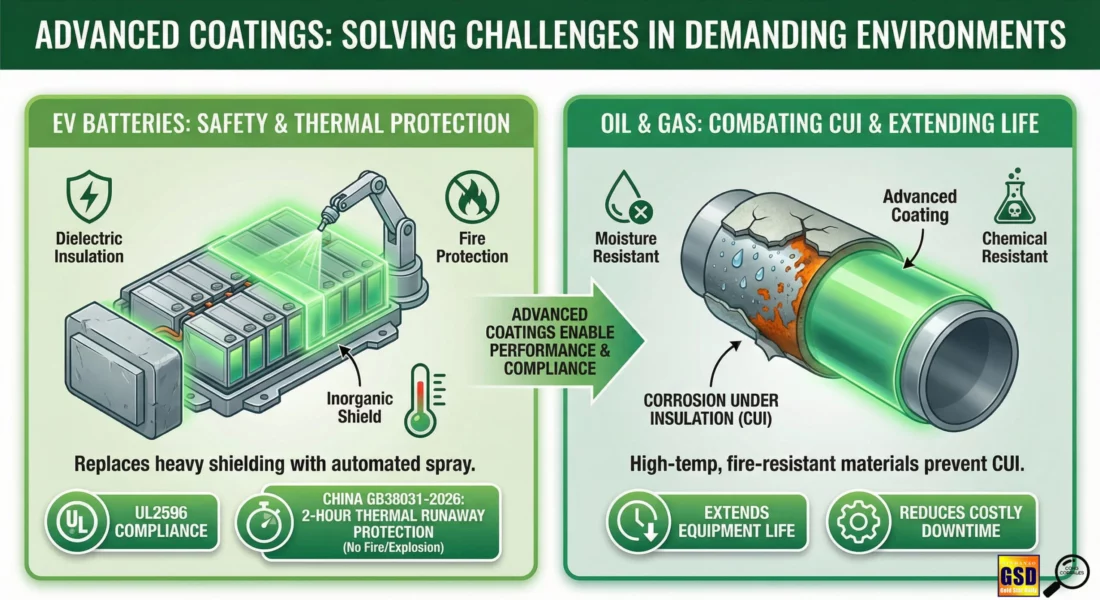
ADVANCED coatings have evolved beyond mere surface layers for aesthetics, becoming critical enablers of performance, regulatory compliance, and global sustainability.
They are reshaping how products are designed, built, and maintained by improving energy efficiency and meeting stringent fire and corrosion standards.
The shift toward functionality
As electrification accelerates and regulations tighten, coatings deliver functional benefits beyond simple protection. Key drivers include:
Thermal Management: Essential for high-performance electronics and energy storage.
Electrical Insulation: Vital for the growing electric vehicle (EV) sector.
Sustainability Compliance: Adapting to meet mandates like eliminating per- and polyfluoroalkyl substances (PFAS), reducing volatile organic compounds (VOCs), and improving recyclability.
Streamlining productionModern coatings prioritize a long shelf life, short ambient cure times, and ease of application.
One-component systems, low-viscosity formulations, and water-based alternatives are improving production efficiency and environmental footprints.
Sector-specific solutionsAdvanced coatings address challenges in demanding environments:
EV Batteries: Provide dielectric insulation and fire protection, meeting safety standards like UL2596 and GB38031-2026.
Oil & Gas: Combat corrosion under insulation (CUI) with high-temperature, fire-resistant materials.
Future-proofing through regulationSustainability frameworks like REACH drive innovation, with bans on PFAS and heavy metals forcing manufacturers to adapt.
Coatings must comply with fire safety standards and energy efficiency directives, pushing the industry toward lighter and more durable designs.
As regulations tighten, coatings will remain a cornerstone technology across industries.
For deeper analysis, see IDTechEx’s “Advanced Coatings 2026–2036: Market, Technologies, Players.”