FIRST responders in Zamboanga City are intensifying their crackdown on the online sexual abuse and exploitation of children (OSAEC), aiming to dismantle a culture where the crime is often dismissed by locals as merely “chat-chat.”
In an emailed advisory from International Justice Mission, Rebelander S. Basilan, the group’s senior lead in its Campaigns and Local Media Engagement, said the the Philippine National Police’s Women and Children Protection Center–Mindanao Field Unit (PNP WCPC-MFU) has carried out 18 operations, which led to the rescue of 53 victims and the arrest of 14 suspected traffickers across the Zamboanga Peninsula region since 2015.
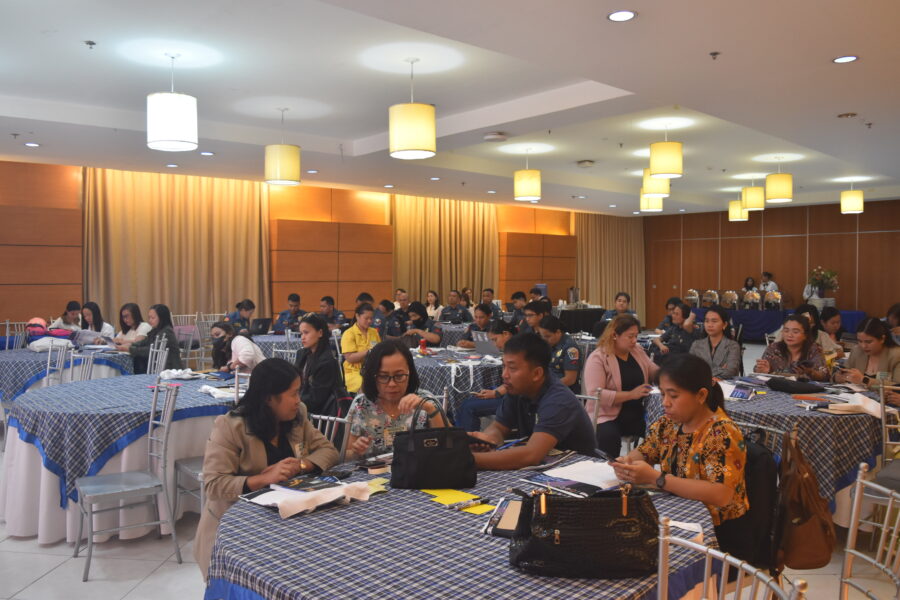
“Last Nov. 24-28, 2025, law enforcers, social workers and other frontliners underwent training to intensify the fight against online sexual abuse and exploitation of children in Zamboanga City,” Basilan said.
He added: “Over 40 frontliners joined the Multi-Disciplinary Team Basic Internet Crimes Against Children (MDT-BICAC) training organized by International Justice Mission (IJM), in partnership with the Zamboanga City Government.”
The urgency stems from the crime’s disturbing normalization. According to the International Justice Mission (IJM), local traffickers are often parents or relatives who livestream abuse for payment. In some neighborhoods, this is referred to as “show” or “cybersex,” creating a false sense that the act is harmless content creation rather than severe abuse.
“This is not just a ‘show’ or ‘online content’ — it’s real abuse with lifelong consequences,” said Evelyn Pingul, IJM Philippines’ Community Engagement Director.
“Each of us has a moral and civic responsibility to speak up and act when we see it happening in our communities.”
A hidden epidemic
OSAEC is a widespread crisis in the Philippines. IJM’s “Scale of Harm” prevalence study estimated that nearly 500,000 Filipino children were victims of this crime in 2022 alone.
In the Zamboanga Peninsula, authorities have arrested at least 14 suspects and rescued 53 victims in 18 operations since 2015, according to the Philippine National Police’s Women and Children Protection Center–Mindanao Field Unit (PNP WCPC-MFU).
However, officials admit the crime remains elusive.
“OSAEC is complex, borderless, and often hidden,” said Police Col. Mario Baquiran Jr., chief of PNP WCPC-MFU. “But through capacity-building efforts like this, we strengthen our ability to identify, investigate, and respond effectively to cases.”
Strengthening the safety net
The Multi-Disciplinary Team Basic Internet Crimes Against Children (MDT-BICAC) training, organized by IJM and the City Government, focused on bridging gaps between agencies.
The goal is to prevent fragmented investigations and inconsistent case handling. Sessions covered the Philippine legal framework, trauma-informed care for survivors, and digital investigative strategies.
This initiative supports the city’s anti-OSAEC ordinance passed in March, which institutionalized funding and programs to eradicate the crime.
“The presence of every government leader, every officer and enforcer of the law... sends a clear and unconditional message: Zamboanga is a city that protects its young,” said Judge Gregorio V. dela Pena III, Lead Convenor of the Zamboanga City Justice Zone.
Mayor Khymer Adan Olaso, in a statement delivered by Executive Assistant Ret. Gen. Edwin de Ocampo, affirmed the city remains “steadfast” in improving reporting mechanisms and partnering with NGOs and barangay councils.
Reporting the crime
The Philippines has a robust legal framework against these crimes, including the Expanded Anti-Trafficking in Persons Act and the specific Anti-OSAEC Law (Republic Act No. 11930).
However, the laws only work if the silence is broken.
To report suspected OSAEC cases in the Zamboanga Peninsula:
WCPC-MFU: 0917-180-6037
Nationwide (Globe): 0966-725-5961
Nationwide (Smart): 0920-907-1717