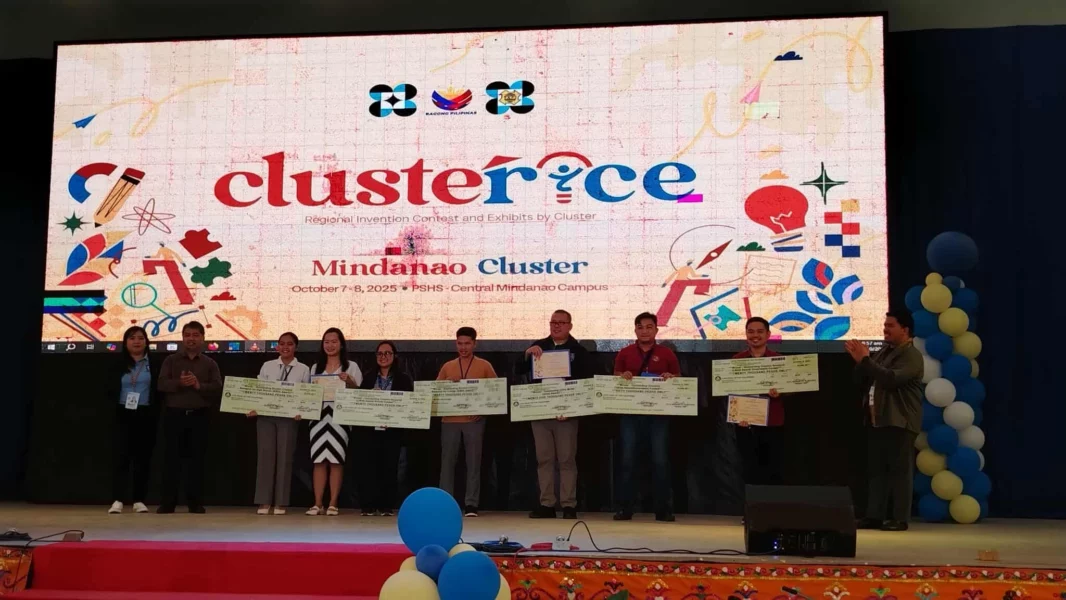
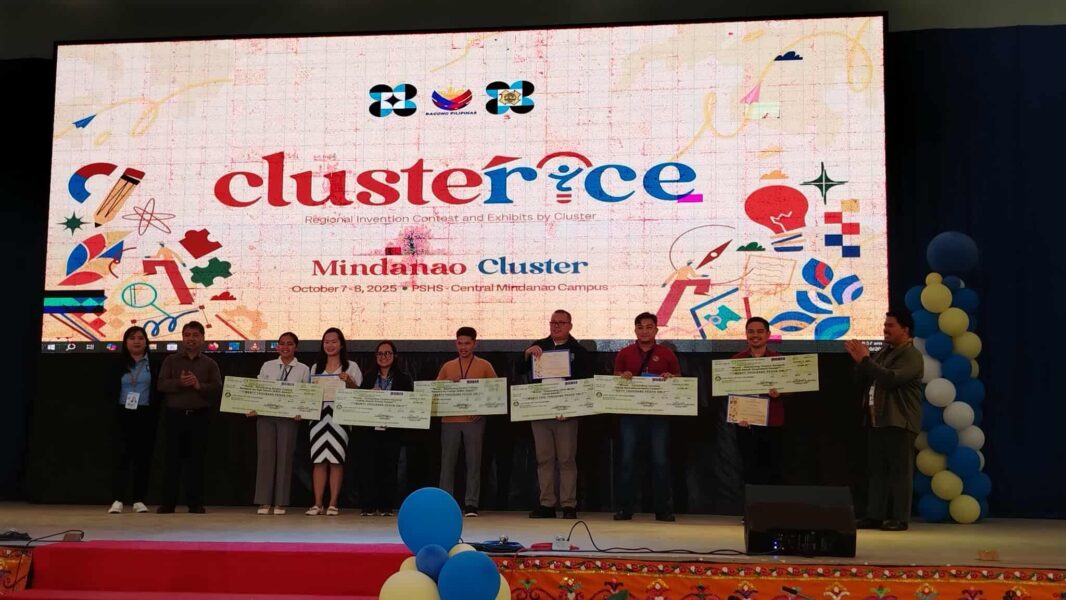
THE Department of Science and Technology–Technology Application and Promotion Institute (DOST-TAPI) recently held the Mindanao leg of the 2025 Regional Invention Contests and Exhibits (RICE) at the Philippine Science High School–Central Mindanao Campus in Balo-i, Lanao del Norte, on Oct. 7–8.
The nationwide event recognizes the indispensable role of Filipino inventors in national development and economic growth. This year’s RICE gathered some of the country’s brightest inventors and researchers who are making strides in agriculture, health, safety, and community livelihood.
Among the winners were inventors honored in four major categories: Tuklas, Unlad, Likha, and Sibol.
For outstanding utility model, Dr. Rene Chavez and Dr. Gerwine Medio of Region 10 developed a car charging and battery monitoring system. From Region 11, Ryan M. Abenoja created a mechanical coconut climber, a tool designed to make tree climbing safer and more efficient.
“Our device isn’t a machine but a tool that supports the body using natural movement and balance,” Abenoja said. “Many coconut harvesters risk their lives daily. This tool shortens training time and makes climbing safer for everyone.”
In the government-funded creative research category, Keno M. Mendoza was recognized for ZAPPIFY, an IoT-based insect pest management system for rice fields that reduces pesticide use and helps farmers monitor pest activity.
“Our invention operates automatically—it turns on at 6 p.m. and off at 6 a.m. It even detects full moon conditions and adjusts its light settings,” Mendoza explained. “Through IoT, we’ve eliminated human intervention, allowing farmers to monitor insects accurately and safely.”
In the private creative research category, Dr. Allen Salvatierra received the Likha Award for his Fecal Smear Kit Pack.
For the Sibol Awards, which honor student innovators, Ronie L. Naquila Jr. developed an automatic rice seed varietal purity testing machine using artificial intelligence and automation.
Meanwhile, April Ann L. Vino, a high school researcher, won for her study titled “Hibiscus Sabdariffa: A Bio-Chemical Activity Probing of Ethnopharmaceutical Potential,” which explored the plant’s antidiabetic properties and livelihood potential.
“My research is not just about science—it’s about uplifting my community’s livelihood,” Vino said. “We gave new value to hibiscus, a plant once sold cheaply. Now, it’s seen as a viable source of income and pride.”
DOST-TAPI Chief Science Research Specialist Caesar Angelito Arceo said the event motivates young Filipinos to innovate and apply what they learn in science and technology.
“Many of them are the cream of the crop,” Arceo said. “They represent the next generation who will strengthen our science and technology ecosystem.”
As part of its mandate, DOST-TAPI continues to support Filipino inventors by promoting their innovations, providing assistance, and helping them bring their products to market.