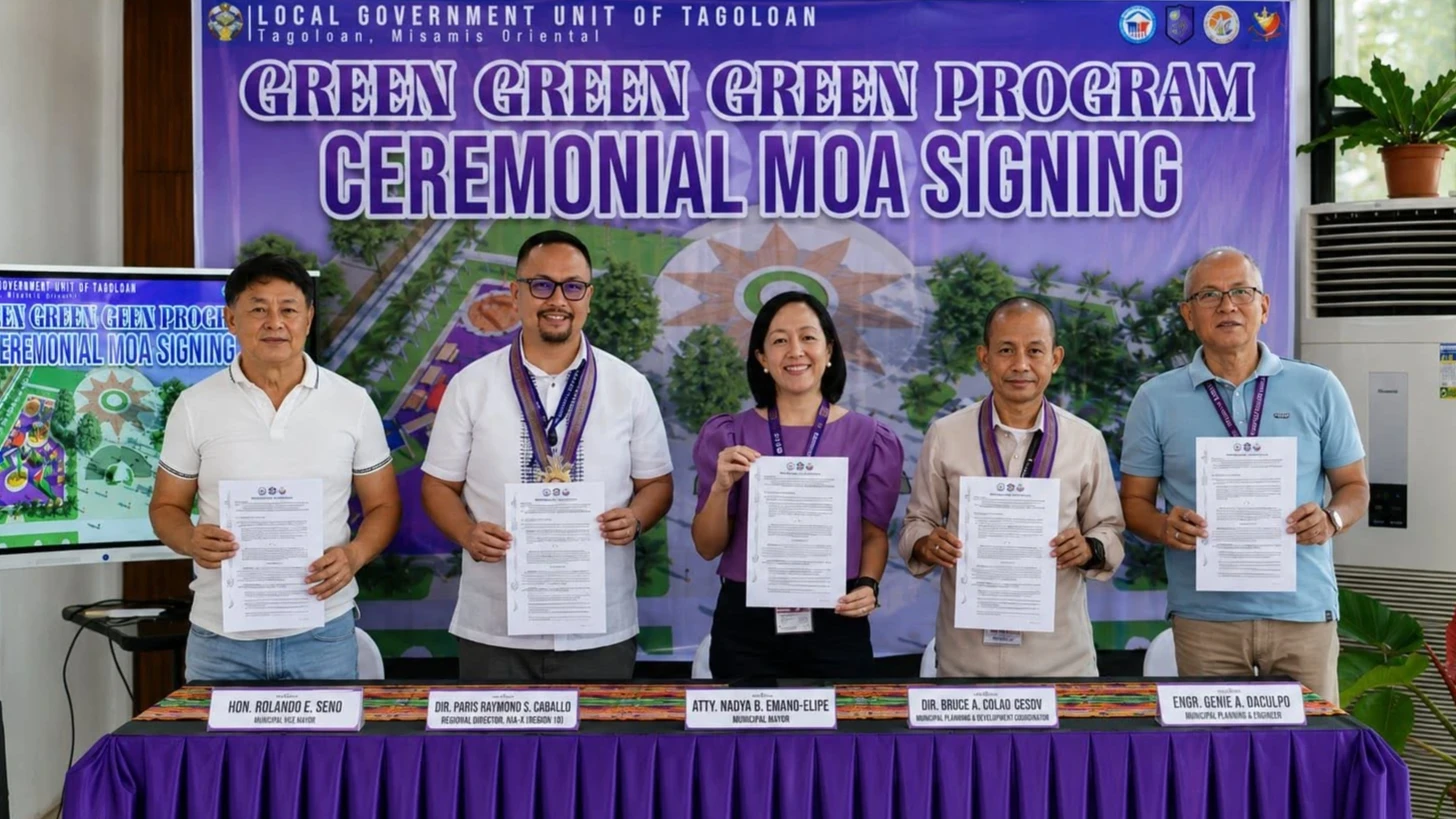
CAGAYAN de Oro City — Northern Mindanao local governments are being urged to tap a national government fund for parks, public spaces and walkability improvements—but getting the funding is only the beginning.
The Department of Human Settlements and Urban Development in Northern Mindanao (DHSUD-10) is encouraging local government units (LGUs) to apply for funding under the Marcos administration’s Local Government Support Fund–Green, Green, Green (LGSF-GGG) program.
For residents, the bigger question is whether these funds will translate into public spaces that are completed as promised, accessible to communities and properly maintained.
DHSUD-10 Regional Director Paris Raymond S. Gaballo said the program can support the improvement and rehabilitation of existing parks, construction of new parks and walkability improvements in public areas.
“It’s the improvement and rehabilitation of parks, even the construction of new parks, and also to improve walkability in public areas in the LGU,” Gaballo said.
The GGG program supports public open spaces and facilities, including parks and areas that promote active mobility.
It can also help LGUs address climate change, extreme heat, flooding and rapid urbanization through green infrastructure.
But LGUs must meet requirements before they can access the funding.
Gaballo said an approved and updated Comprehensive Land Use Plan (CLUP) is an important requirement for LGUs seeking GGG funding.
GGG recipients are generally pre-identified by the Department of Budget and Management (DBM), with population density among the indicators considered in identifying beneficiary LGUs.
Other LGUs may submit applications through the DBM online portal.
DHSUD-10 said it can provide technical assistance on project design, documentary requirements and timelines and coordinate with DBM on related concerns.
Who is responsible for delivery?
Ultimately, the responsibility for turning GGG allocations into functioning public spaces rests with the beneficiary LGUs.
DHSUD-10 provides technical assistance, while DBM handles the fund allocation process. The Department of the Interior and Local Government (DILG) is expected to lead monitoring in coordination with DBM and the beneficiary LGUs.
The Regional Development Council also monitors GGG projects through its Regional Project Monitoring and Evaluation System (RPMES).
These roles matter because public accountability does not end when an LGU receives funding or breaks ground on a project.
Residents should be able to know how much funding was received, what was promised, where the project is located, who will benefit and whether the project was completed according to plan.
They should also be able to see whether the finished facility remains usable and properly maintained after construction.
Normin's GGG projects
Northern Mindanao has previously received GGG funding for projects in several provinces, cities and municipalities.
For 2024, approved beneficiaries included the provinces of Misamis Oriental, Misamis Occidental and Camiguin; Cagayan de Oro City; the municipalities of Villanueva and Lugait in Misamis Oriental; and Baloi in Lanao del Norte.
For 2025, beneficiaries included Lanao del Norte province, Ozamiz City, and the municipalities of Jasaan, Laguindingan and Tagoloan in Misamis Oriental.
In Tagoloan, the local government is implementing a GGG project intended to provide green space for children and senior citizens.
In Jasaan, Misamis Oriental, the local government and DHSUD-10 broke ground on Aug. 30, 2026, for the P10.6-million improvement of Jasaan Public Plaza under the GGG program.
The project is scheduled to start Sept. 1 and is expected to be completed by March 1, 2027.
The project now gives residents a concrete opportunity to track whether the promised improvements are delivered within the stated timeline and whether the completed plaza serves its intended users.
Technical capacity remains a challenge
Gaballo acknowledged that limited technical personnel may pose a challenge for some LGUs in preparing project proposals.
He encouraged LGUs to seek assistance from professional organizations, academic institutions and other LGUs with experience implementing GGG projects.
In Laguindingan, Misamis Oriental, the local government partnered with the United Architects of the Philippines for pro bono architectural design assistance. Intended beneficiaries also participated in selecting the project design and materials.
Such partnerships can help LGUs develop projects that respond to actual community needs while meeting technical requirements.
Gaballo also highlighted the broader benefits of green spaces, saying they can contribute to climate resilience and promote mental health by giving residents opportunities to spend time outdoors and reconnect with nature.
But for communities, the measure of success ultimately goes beyond the number of projects approved or the amount of money released.
The responsibility for delivery rests with the beneficiary LGUs, with national and regional agencies providing funding, technical support and monitoring. For residents, accountability means being able to see where the money went, whether the project was delivered as promised, who benefits from it and how the facility will be maintained once construction is finished.
Green infrastructure can make Northern Mindanao communities cooler, more walkable and more livable—but public funds must ultimately result in public spaces that people can actually use and enjoy.