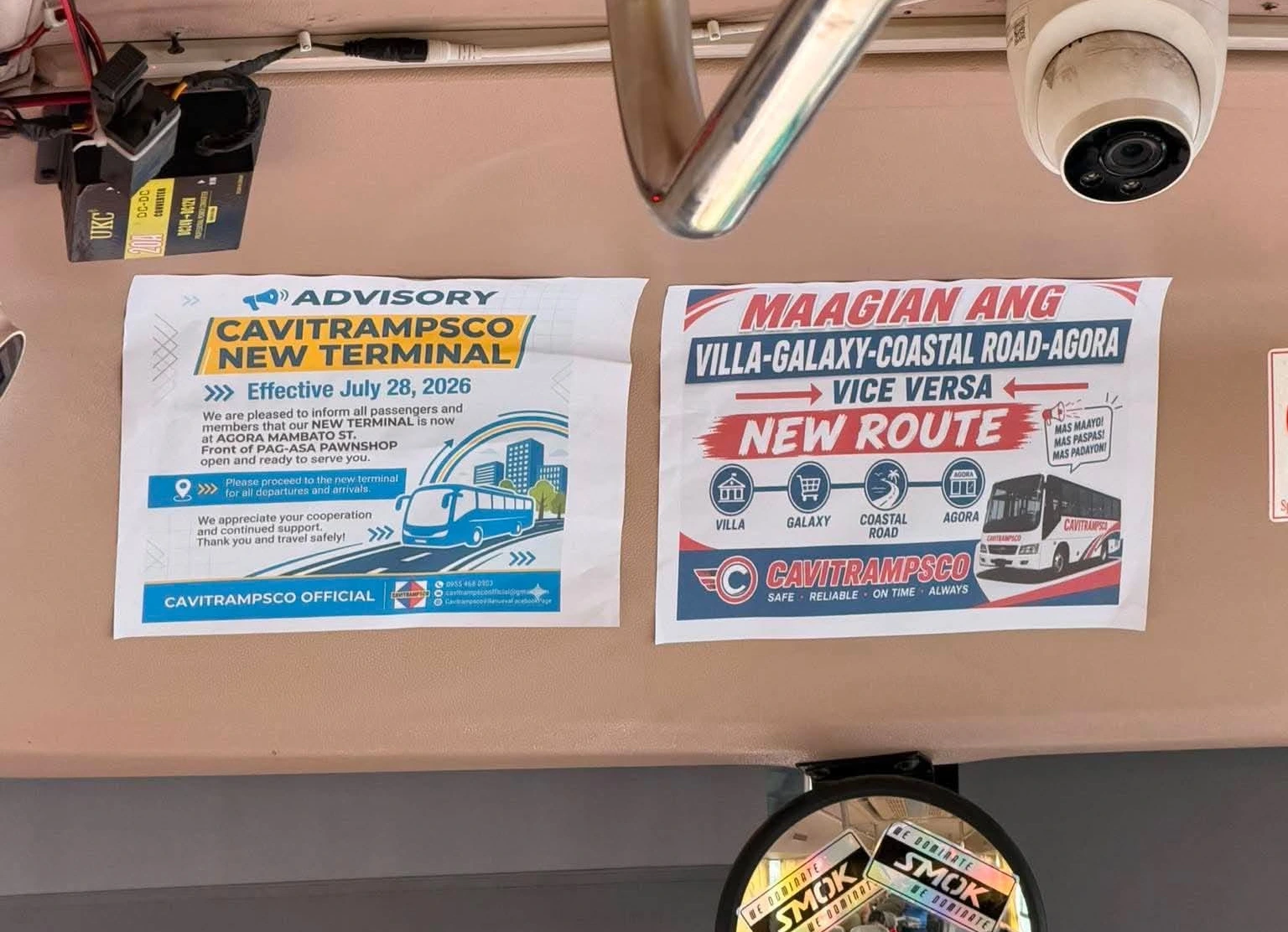
CAGAYAN DE ORO CITY — Thousands of commuters from neighboring towns faced longer trips and additional transportation costs this week as the city began enforcing a long-standing ordinance requiring provincial public utility vehicles (PUVs) and buses to use only the designated transport terminals in Bulua and Agora.
Beginning July 28, the Roads and Traffic Administration (RTA) started implementing Section 120 of City Ordinance No. 10551-2007, directing all eastbound and westbound PUVs and buses with routes beyond Cagayan de Oro to terminate at the Farmers Market and Transport Terminal in Bulua or the Agora Market City Transport Terminal in Lapasan.
Passengers bound for the city proper must transfer to another jeepney or other public transport to complete their journey.
The move immediately drew criticism from workers, students, senior citizens and other daily commuters who said the policy has made commuting more expensive and inconvenient.
Several commuters took to social media to express frustration over what they described as a lack of preparation before the policy's enforcement.
Many cited the shortage of jeepneys serving key destinations such as Limketkai Center, Gaisano City and SM City Uptown, resulting in long queues and delays at the Bulua Terminal.
Others raised concerns over the terminal's cleanliness, traffic congestion, and the additional fare required to reach the city proper.
Some commuters also questioned why provincial buses now stop at the terminal while fares from their hometowns remained unchanged despite the shorter route into the city.
Several posts argued that the policy disproportionately affects students, minimum wage earners, persons with disabilities, senior citizens, pregnant women and families traveling with children, who now have to endure additional transfers, longer travel times and higher transportation expenses.
Others also pointed out that while many commuters come from neighboring municipalities and are not registered voters in Cagayan de Oro, they contribute to the city's economy as workers, consumers, students and business owners.
City officials, however, defended the implementation, saying the measure is intended to reduce traffic congestion and improve public transport management.
City Councilor Edgardo Cabanlas said the city conducted an ocular inspection of the Westbound Terminal before the implementation as part of preparations for the return of provincial vans, minibuses and jeepneys to the facility.
Cabanlas acknowledged that complaints were expected but said such reactions are normal during the initial stage of implementation.
He said the policy aims to maximize the use of the city's designated terminals and ease traffic congestion, particularly in the downtown area.
Meanwhile, City Information Officer Jade Adeser clarified that the implementation remains under a dry run and that adjustments may still be made based on public feedback.
Adeser emphasized that the measure is not a new policy but the enforcement of an ordinance passed in 2007 during the administration of the late mayor Vicente "Dongkoy" Emano and reimplemented by succeeding city administrations.
He said the ordinance's primary goals are to decongest city roads and regulate the operation of public utility jeepneys within Cagayan de Oro.
As the dry run continues, commuters are calling on the city government to improve transport connections, increase the number of city-bound jeepneys, address sanitation and congestion at the terminals, and ensure that any long-term traffic solution does not place a heavier burden on those who rely on public transportation every day. (Ben Balce, Editorial Lead)