By Gladys Chu, Publisher- CEO
I grew up above a newspaper.
Our home occupied the top floor of the same building where Mindanao Gold Star was produced. Downstairs were the editorial offices, the printing press, stacks of newsprint, and the constant rhythm of people trying to meet another deadline.
Some of my earliest memories are not visual but sensory, the smell of fresh newsprint and ink, the rhythmic sound of the printing press late into the night. As children, my sisters and I hardly paid attention to it. It was simply the soundtrack of home.
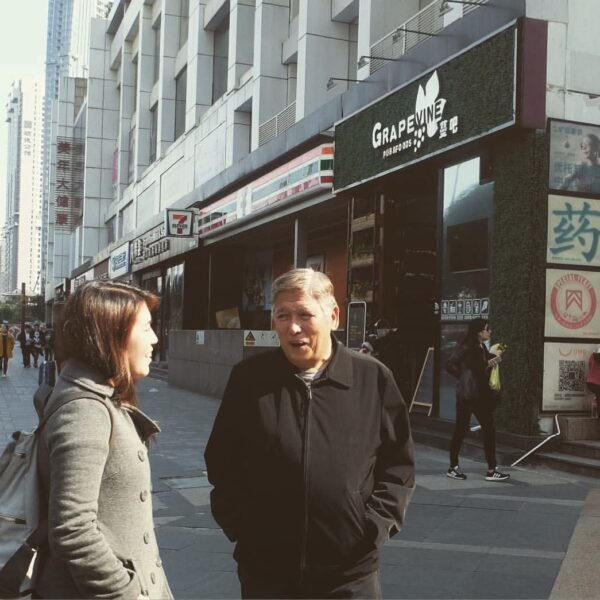
I never really understood what my father did.
I simply knew this was our family’s business.
Looking back, I realize how much of his life revolved around it. Newspapers have a way of refusing ordinary schedules. News does not stop for weekends or holidays. Yet despite the demands of running a newspaper, my father was always present.
Sundays often meant driving to Bukidnon, Iligan, or Gingoog to visit our bureau offices. During the summer, those trips stretched even farther—to Surigao, Dipolog, or Davao. It became a family affair. My grandmother, uncles, aunts, cousins, and all of us would pile into our vehicles and spend days on the road together.
At the time, those trips simply felt like family vacations. Only years later did I realize that while we were making memories, my father was also doing the quiet work of keeping a newspaper together. In an era before email, smartphones, and social media, relationships were built by showing up. I remember him making those long drives to our bureau offices year after year, understanding now that they were about far more than checking in.
Looking back, I think one of my father’s greatest strengths was understanding that a newspaper could not survive on journalism alone. It also had to survive as a business.
Like many children of founders, I never questioned that one day my sisters and I would become part of the business. What I never imagined was that I would inherit it at a time when the industry itself was changing.
When I left to study abroad, I imagined building a life independent of the family business. Returning home was never part of my plan. Life unfolded differently, and eventually I found myself back where I had started.
When I stepped into leadership, I realized that becoming the second generation was not simply about inheriting a company.
It was about inheriting it at a particular moment in history.
My father built a newspaper during the rise of print.
I inherited it during the reinvention of journalism.
The institution remained the same.
The world did not.
For a long time, I thought my responsibility was to protect my father’s legacy. Over time, I came to understand that legacy is not about preserving every practice exactly as it was. It is about carrying forward the values that matter while having the courage to evolve.
That has become the challenge of my generation.
Our responsibility is not simply to publish the news, but to ensure it continues to reach people in meaningful ways. That means understanding our audience better, embracing new platforms, and finding new ways to tell the stories that have always mattered.
We lead differently because we inherited different worlds.
My father’s generation built institutions.
Mine has the responsibility of helping them remain relevant.
As Mindanao Gold Star marks its thirty-seventh anniversary, I find myself feeling less like someone who inherited a newspaper and more like someone entrusted with its next chapter.
The technologies will continue to change. So will the ways people consume information.
Our purpose, however, remains the same.
To tell the stories of Mindanao with integrity.
To serve the communities that have trusted us for thirty-seven years.
And to ensure that the newspaper my father built continues to earn that trust for many years to come.
That, to me, is what it means to become the second generation.