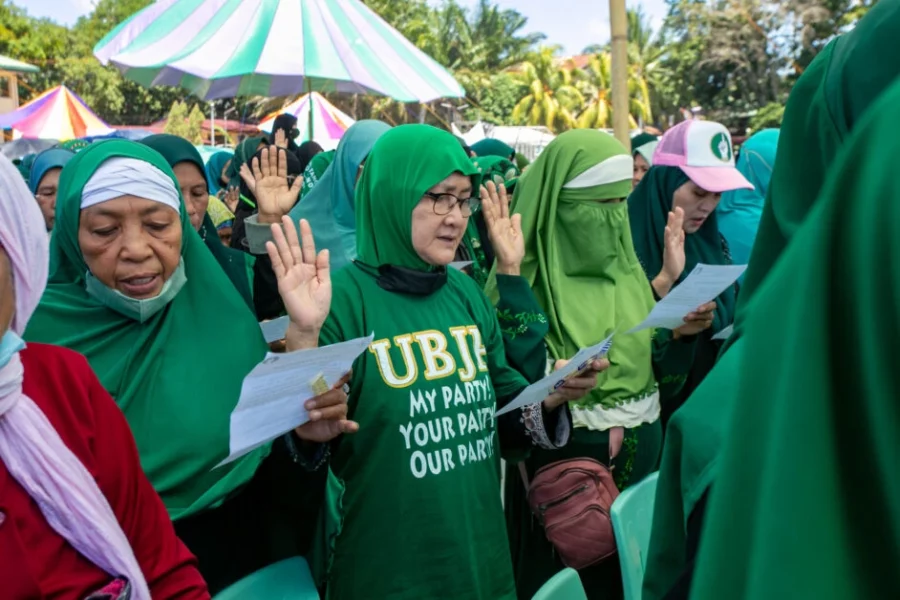
Cagayan de Oro City — With the May 7 deadline for filing Certificates of Candidacy (COCs) fast approaching, the accreditation of the United Bangsamoro Justice Party (UBJP) remains unresolved, raising uncertainty over the party’s participation in the historic Sept. 14 parliamentary elections in the Bangsamoro Autonomous Region in Muslim Mindanao.
The Commission on Elections has yet to issue a formal decision on the UBJP’s application despite the party’s submission of required documents, including a sworn list of authorized signatories and other compliance papers.
Read related story: Tight security marks Barmm poll filing
Without accreditation, the UBJP cannot officially field candidates under the party banner for the region’s first parliamentary polls.
For voters and political aspirants, the delay means uncertainty over the final lineup of candidates and alliances that will compete for seats in the 80-member BARMM parliament.
The accreditation process is part of a broader Comelec review requiring all regional political parties — both new and existing — to reapply ahead of the 2026 elections to ensure compliance with updated rules.
Legal challenges have further complicated the process, including petitions opposing the accreditation of certain groups and reported internal issues within the UBJP.
The Comelec has not announced when it will release the final list of accredited parties.
Despite the pending applications, the election calendar continues.
Regional parliamentary political parties were required to file accreditation applications by April 7, followed by party conventions on April 29. Filing of COCs ends May 7.
The official election period begins July 16, while the campaign period starts July 30. Campaigning will be prohibited on the eve of the Sept. 14 elections.
Read also: Barmm polls finally begin after delay
Candidates are also required to file their Statements of Contributions and Expenditures by Oct. 14.
The Sept. 14 polls will mark BARMM’s first parliamentary elections, transitioning the region from the appointed Bangsamoro Transition Authority to a fully elected parliament — a major step in implementing the 2014 peace agreement between the Philippine government and the Moro Islamic Liberation Front.
For residents, businesses, and transport sectors in neighboring areas such as Cagayan de Oro City and Northern Mindanao, a stable and credible BARMM election is seen as critical to maintaining peace, trade, and regional mobility.