THE City Health Office (CHO) reiterated on Monday that there’s no need to suspend classes or work since there’s no evidence of cases caused by the Nipah virus in Cagayan de Oro City or anywhere in the country.
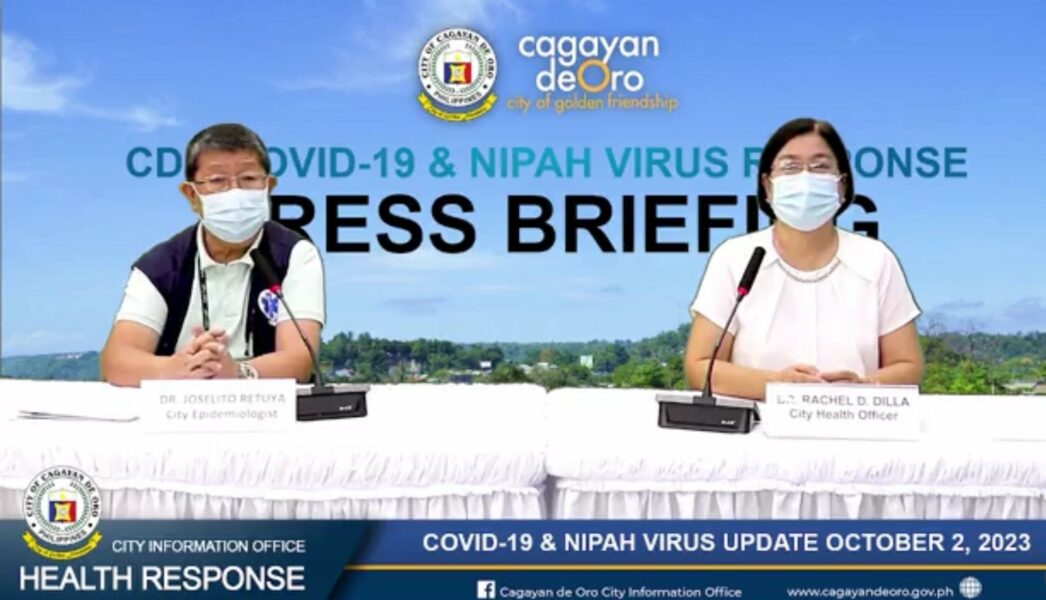
During Monday’s press briefing hosted by the City Information Office, City Health Officer Dr. Rachel Dilla read a Sept. 29 advisory stating that there’s no positive case of Nipah virus in the country as of that date.
“There’s no need for suspension of classes or work at this time,” she said, citing the advisory issued by the Philippine Inter-Agency Committee for Zoonoses (PhilCZ).
Dilla issued a statement last week discounting the possibility of a Nipah virus outbreak following a decision by private universities to suspend classes.
Their decision stemmed from reports that several students in one school fell ill with flu-like symptoms. The CHO stance was supported by the Department of Health-10.
Dilla confirmed that the Nipah virus — which caused concern following an outbreak in a remote village in India — was commonly found in fruit bats and causes illness in pigs, horses, dogs, and people through direct contact with infected blood, urine, feces, respiratory droplets, and saliva or consumption of contaminated food products.
“(Nipah virus) infection may display flu-like symptoms but include complications such as the fatal encephalitis and respiratory illness,” Dilla said.
In response to the suspension of classes, Mayor Rolando Uy issued an executive order reminding the public to observe minimum public health protocols such as wearing of face masks and physical distancing.
CHO resident epidemiologist Dr. Teodulfo Retuya Jr. echoed Dilla’s statements, saying the last recorded case of Nipah virus infection occurred somewhere in Mindanao in 2014 and that no new case had been reported since.
“Although we can take a sample of (suspected cases) we have to send samples to Manila which had a turnaround time of one to two weeks,” he said. (Stephen Capillas of City Information Office)