THE highly anticipated P3.4 billion sewerage project in Cagayan de Oro has received strong support from both the City Council and the Regional Development Council of Region X (RDC-X).
This is an important milestone that will help move the project forward and address the city's urgent sanitation needs.
The said amount also accounts for 43% of Cagayan de Oro’s P8.289-billion annual investment plan (AIP) for 2023, which was already approved by the City Development Council (CDC) on September 27, 2022.
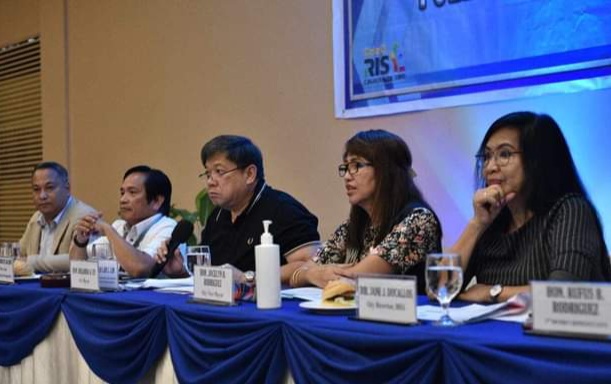
On Thursday, City Hall tackled its annual investment plan (AIP) based on its city development plan and comprehensive land use plan during its full CDC meeting.
A monumental P3.4 billion investment is set to fund an extensive sewerage project in the city, a cornerstone of Mayor Rolando "Klarex" Uy's Regional Leadership, Institutional Development, Safety, and Security, and Economic Recovery or RISE's environmental agenda.
The project was presented by Engr. Armen Cuenca, the Cagayan de Oro City Local Environment and Natural Resources Office (Clenro) chief.
According to Cuenca's report, the project is also supported by the National Sewerage and Septage Management Program under Republic Act 9275.
This program requires the Department of Public Works and Highways (DPWH) to collaborate with local government units (LGUs) to establish a compliance plan for connecting establishments and households to the sewerage system.
In a 7-page report, it was mentioned that Mayor Uy is prioritizing an important sewerage project as part of his environmental agenda.
This substantial investment, which includes construction costs, price contingencies, engineering design, construction supervision, and land acquisition, will be allocated across two phases from 2022 to 2037.
It is also stated that the project aligns with the Clean Water Act of 2004, or Republic Act No. 9275, which mandates Local Government Units (LGUs) to develop a program for septage and sewerage management.
The Act also permits LGUs to utilize the land for the construction of sewage and/or septage treatment facilities and to generate funds for these facilities through local property taxes and service fees.
Furthermore, it provides a 50% subsidy for sewerage and septage projects in highly urbanized cities.
The project is in alignment with the Department of the Interior and Local Government (DILG) Memorandum Circular No. 2019-62, which reemphasizes the roles of LGUs in implementing sewerage treatment and septage management systems.
City Ordinance No. 13827-2020 also provides support for the project, which aims to establish a Septage and Sewerage System in Cagayan de Oro City.
According to the report, the project is in line with the city's Local Sustainable Sanitation Plan, which aims to ensure that by 2030, residents ("Kagay-anon") will have full access to safe and adequate water supply, sanitation, and a healthy environment.
A feasibility study for the project was conducted by Woodfields Engineers Company from March 2017 to July 2018.
"The study was conducted to assist the DPWH in granting a subsidy for the project, which will cover 50% of the project cost," explained the report.
The project is divided into two phases: Phase 1 from 2022 to 2029 and Phase 2 from 2030 to 2037. The projected total water demand from 2022 to 2037 is 68.62 million liters per day (MLD).
The estimated total investment cost for Phase 1 is P2.047 billion, and for Phase 2, it is P1.354 billion, bringing the total to P3.401 billion.
This cost includes construction, price contingencies, engineering design, construction supervision, and land acquisition, as stated in the report.
According to the report, 50% of the financing for Phase 1 is expected to be provided as a grant from DPWH-NSSMP, while the remaining 50% will come from the LGU.
As of now, the necessary documents for the NSSMP Grant Application have been prepared and the Local Sustainable Sanitation Plan has been adopted by the City Council.