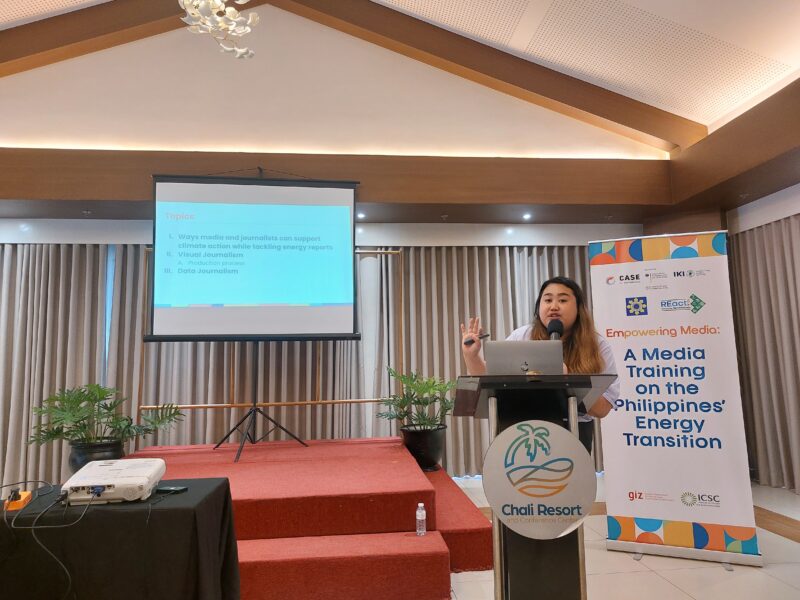
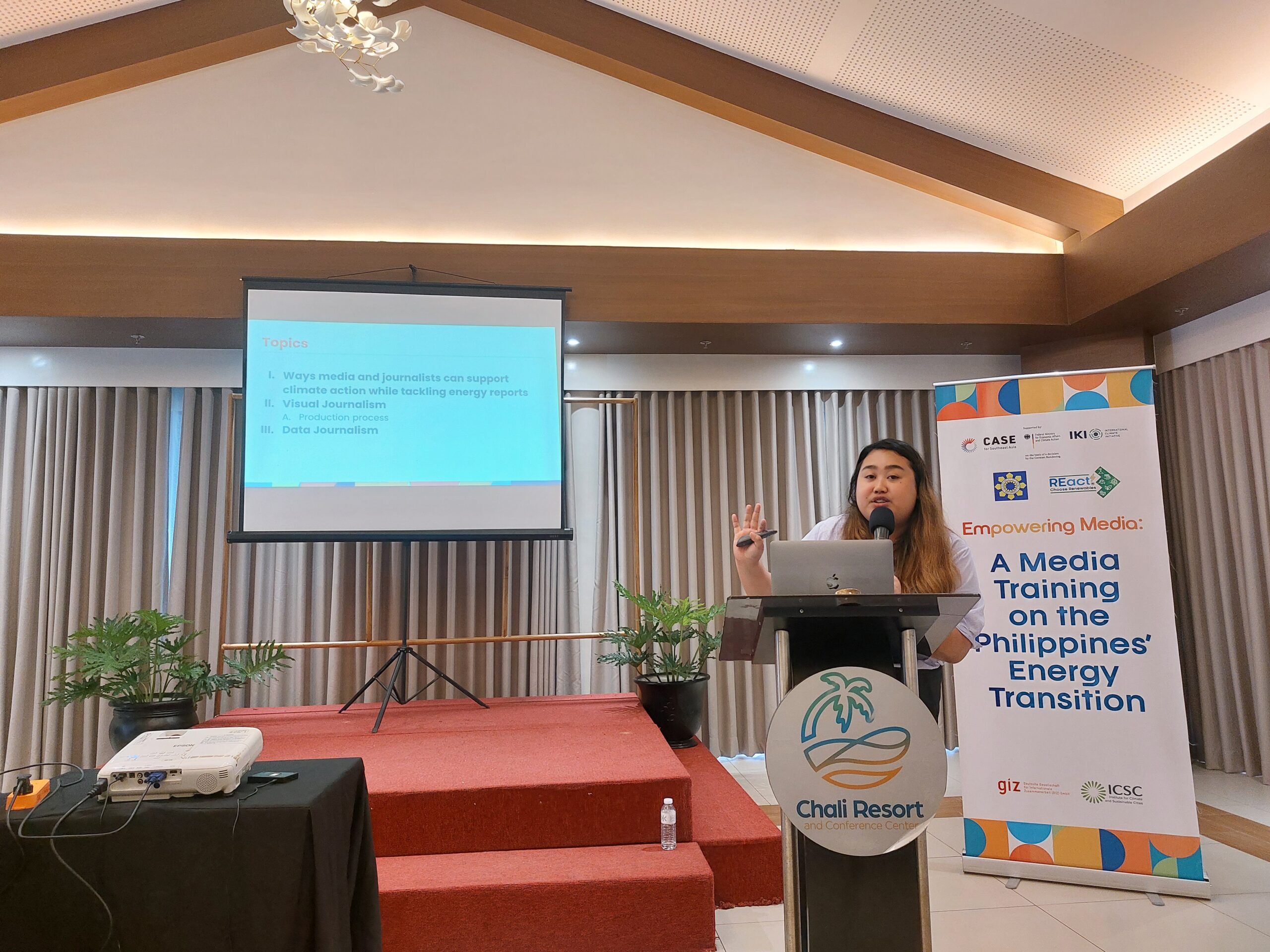
THE Institute for Climate and Sustainable Cities (ICSC) conducted a two-day training on energy reporting for local media at Chali Beach Resort, Cagayan de Oro City, on August 30-31.
Thirteen journalists participated in the event, which aimed to enhance media coverage of energy-related stories, according to ICSC Senior Communications Officer and Media Coordinator Sanafe Marcelo.
On the first day, representatives from the Department of Energy (DOE) presented the department’s renewable energy plans, including initiatives for solar, wind, hydro, and biomass energy.
The presentation was intended to guide journalists in accurately reporting on energy issues, Marcelo said.
Amor Barlisan, Director of the Cagayan de Oro Press Club and a participant in the training, highlighted the importance of the DOE’s insights, especially in light of ongoing challenges such as brownouts, power interruptions, and rising electricity bills.
Barlisan emphasized that the training was valuable for journalists covering energy-related topics.
The second day focused on advanced reporting techniques, with Marcelo emphasizing the crucial role of the media in informing the community.
Katherine Culaba, Junior Advisor for Communication of the Clean, Affordable, and Secure Energy (Case) for Southeast Asia, said the event, titled “Empowering Media: A Media Training on the Philippines’ Energy Transition,” aimed to equip local journalists with the knowledge needed to cover the country's energy transition.
Bencyrus G. Ellorin, ICSC Public Engagement and Advocacy Advisor for Mindanao provided participants with key terminologies and concepts related to energy reporting, including distinctions between brownouts, blackouts, and power interruptions.
The training, funded by Germany through Case and facilitated by ICSC, was designed to strengthen the media’s role in reporting on energy issues, Culaba added.