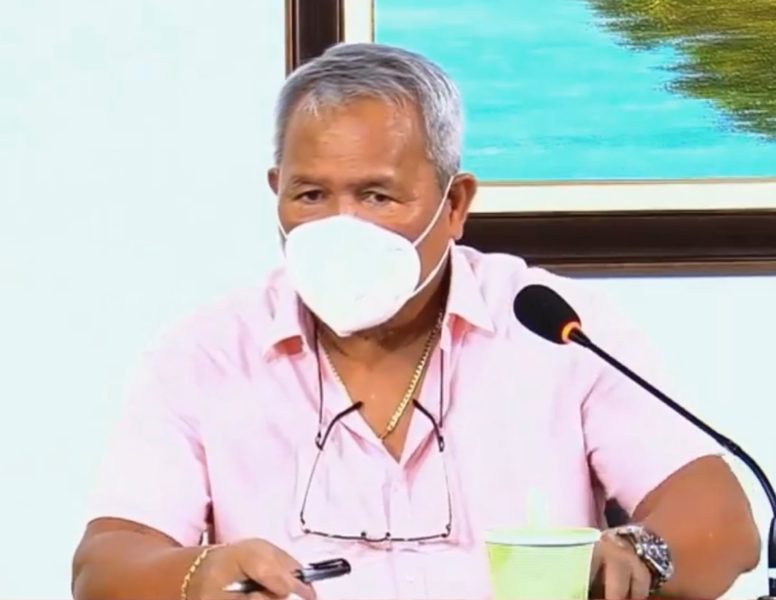
THERE is a very real possibility of an adjustment in quarantine status for Cagayan de Oro City, Misamis Oriental and northern Mindanao due to the rise in Covid-19 cases in the city and region, Mayor Oscar Moreno said today.
“But as much as possible, we have to do everything we can to slow down the spread of Covid-19 to avoid elevating our quarantine status. We at City Hall are doing everything we can by providing additional facilities (and counter-measures like curfew). Because our case doubling time and critical care utilization rate (CCUR) are rising to uncomfortable levels,” Moreno said during Wednesday noon’s City Hall press briefing.
Moreno said this in response to reports that the Department of Health (DOH-10) and Department of Interior and Local Governments (DILG-10) regional offices filed a resolution to the Inter-Agency Task Force (IATF) to elevate northern Mindanao´s quarantine status to general community quarantine (GCQ) status to regulate public movement while avoiding a lockdown.
“As much as possible we don’t want to restrict business but we cannot sacrifice public health. And the bottomline solution to lower the risk level in Cagayan de Oro City, Misamis Oriental and northern Mindanao is for the public to cooperate and comply with minimum public health standards in order to slow down the spread of the virus,” Moreno said.
Moreno said this as Cagayan de Oro City registered its highest single day record of Covid-19 cases at 103 with 26 recoveries and five deaths as of 10 pm of May 18. In her daily case update, acting City Health Officer Dr. Lorraine Nery said the 103 cases consist of 34 cases with links, nine local APOR (authorized persons outside residence) and 57 local index cases.
Moreno said both the Northern Mindanao Medical Center (NMMC), the JR Borja General Hospital (JRBGH) and the city’s private hospitals are finding ways to expand their capacity in order to lower the city’s CCUR and service more Covid-19 cases.
“I thank the NMMC, JRBGH and the city’s private hospitals for keeping the city’s CCUR at 70 percent instead of 90 percent (which are danger levels),” Moreno said.
Despite their efforts, Moreno said the city’s health care frontliners and health care system will find it difficult to sustain the CCUR if the cases keep on rising.
“Regardless of what adjustments are made, we will find it difficult to cope with the cases. Hence we need the public to fully cooperate in at least slowing down the spread of the virus,” Moreno said. (Stephen Capillas of City Information Office)