CAGAYAN de Oro City — Minimum-wage earners in Northern Mindanao could face uncertainty over future pay increases if legal challenges to wage orders delay their implementation, a labor leader has warned.
On Wednesday, Joel Tongco, deputy vice president for Mindanao of the Federation of Free Workers (FFW) and president of the Macalajar Employees Union–FFW, raised the concern over a pending case before the Regional Trial Court in Pasig City involving wage orders issued in the National Capital Region (NCR).
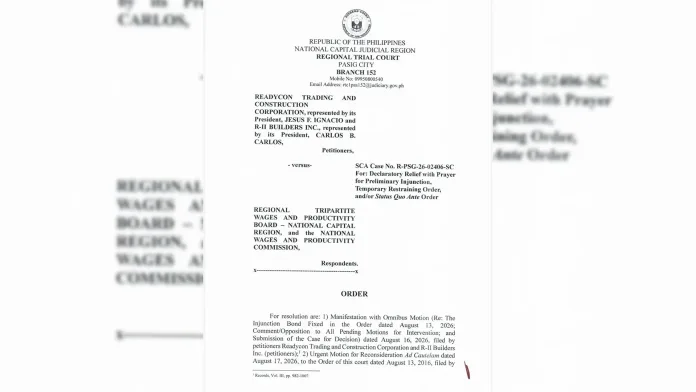
The petition was filed by private construction firms challenging wage orders issued by the Regional Tripartite Wages and Productivity Board (RTWPB) and the National Wages and Productivity Commission (NWPC) for Metro Manila.
Tongco fears similar legal challenges could be pursued in other regions, potentially delaying wage increases for workers who rely on government-mandated adjustments to cope with rising living costs. The Pasig case, however, concerns NCR wage orders.
Its implications for wage orders in Northern Mindanao will depend on the specific legal issues and any subsequent court rulings.
“Through 81 years of collective struggle and bargaining, our members now earn above the minimum wage,” said Tongco adding, but the majority of workers in Northern Mindanao still depend on minimum wage orders for their salary increases.
He said workers continue to face higher costs for basic necessities, including rice, electricity and transportation, making timely wage adjustments important to household budgets.
“Walang TRO [temporary restraining order] ang pagtaas ng presyo ng bigas, kuryente, at pamasahe. Bakit ang dagdag-sahod ng manggagawa ang kailangang pigilan?” Tongco said.
The Macalajar Employees Union–FFW, founded in 1945 in Cagayan de Oro’s port area, marks 81 years of organizing and collective bargaining this year.
Although its members earn above the minimum wage, Tongco said the union remains concerned about workers who depend on regional wage orders for increases in their pay.
“Ang TRO sa Pasig ay hindi dapat maging template sa Mindanao. Hindi dapat magkaroon ng franchise ang injunction laban sa sahod,” he said.
Employers challenging wage orders may raise questions about their legality, implementation or financial impact.
Their specific arguments in the Pasig case, however, need to be established from the court petition and related records.
For workers in Northern Mindanao, the immediate questions are whether the case could affect wage orders outside Metro Manila and whether any existing wage adjustment in the region is subject to a separate legal challenge.
The case also highlights the need for clear public information on the status of challenged wage orders, the relief sought by petitioners, and the effect of any court order on workers’ pay.
As of publication, the specific relief sought in the Pasig petition and its potential effect on wage orders in Northern Mindanao were not established in the information available for this report.