FIFTY-three years since the first Pride March started, the LGBTQIA+ community still suffers from discrimination and violence. Inequality in society persists. Thus, the need to come together and march continues.
Despite being considered one of the most LGBTQIA-friendly countries in Asia, the passage of national legislation that criminalizes discrimination based on sexual orientation, gender identity, and expression (SOGIE) remains to be seen in the Philippines. The SOGIE Equality Bill, the latest version of the anti-discrimination policy filed in Congress, has become one of the slowest-moving bills in Philippine history. Conservative politicians, aided by powerful religious groups, have deliberately blocked the bill from becoming law and have even spread misinformation, smear campaigns, and propaganda against the proposed bill.
In Mindanao, where religion, poverty, and armed conflict influence the circumstances of LGBTQIA+ persons, some local governments—galvanized by the call of grassroots organizations, advocates, and allies—have spearheaded the passage of anti-discrimination ordinances. Some of the few cities and provinces that have passed these ordinances are the cities of Zamboanga, Davao, Cagayan de Oro, and the provinces of Agusan del Norte and Dinagat Islands.
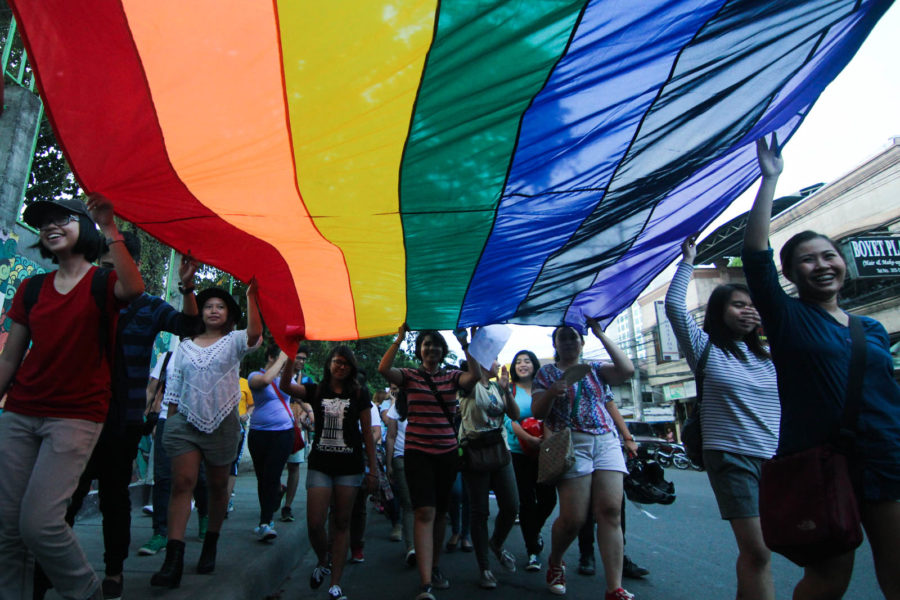
However, despite significant pride formations and activities, we can see that these efforts are concentrated primarily in metropolitan and urban areas. Middle-class LGBTQI members continue to dominate and participate in massive pride activities, while LGBTQI members in rural communities are isolated and alienated. More than this, discrimination and violence continue to be a pervasive problem in the regions of Mindanao. LGBTQI members in the Tri-people (Bangsamoro, Indigenous Peoples, and Migrant Settlers) communities remain invisible, particularly those with families, clans, and highly conservative communities. The strong macho and ultra-conservative cultures and practices dominant in the family, clans, and community of the tri-people in Mindanao are often oppressive and violent to LGBTQI members, hence, forcing them either to run away, to hide deeper in their closet just to have a family to belong to, or to work so hard just to compensate for their identity with hopes that they earn the acceptance of their family member.
In mainstream and social media, we hear of young people shamed and punished for their sexuality by getting their hair publicly shaved off; of people assaulted or killed in their own homes and communities; and of ordinary citizens publicly deemed pariahs because of their identities and are driven off of their own towns and their livelihood. These are some of the few stories that make it to public knowledge, but there are many more that remain undocumented. These circumstances alter and shape the present situations and prospects of LGBTQI people in Mindanao.
Today, WE, the collective behind KAHILYAWAN 2023—together with LGBTQIA+ organizations and allies gathered in this celebration—reiterate our calls for safe spaces in celebrating our identities and showcasing the uniqueness of every individual. Furthermore, we challenge the government as duty-bearers to ensure the community’s protection by enacting and fully implementing the SOGIE Bill, and other anti-discrimination laws from local to national levels.
We demand immediate investigations of hate crimes that surfaced particularly in BARMM areas. We appeal to every LGBTQIA+ organization to elevate their discussion by bringing human rights lenses into their advocacies and programs. Lastly, we also call for every Civil Society Organization, sector, and member of the community to join us in our intersectional struggle to fight for equality and justice.
We must not forget that Pride March started as a riot to defend our community from harassment and violence.
Those who marched before us courageously protested and paved different ways so we can celebrate today. These protests must continue until we can say that our community is truly safe and free from discrimination and hatred.
Kahilwayan 2023
A collective of LGBTQIA+ organizations and allies here in Northern Mindanao.