MALAYBALAY City, Bukidnon — Northern Mindanao imports around 25,000 metric tons of coffee, highlighting the gap between local production and demand that the Department of Agriculture (DA)-10 and Nestlé Philippines want to address through a renewed partnership.
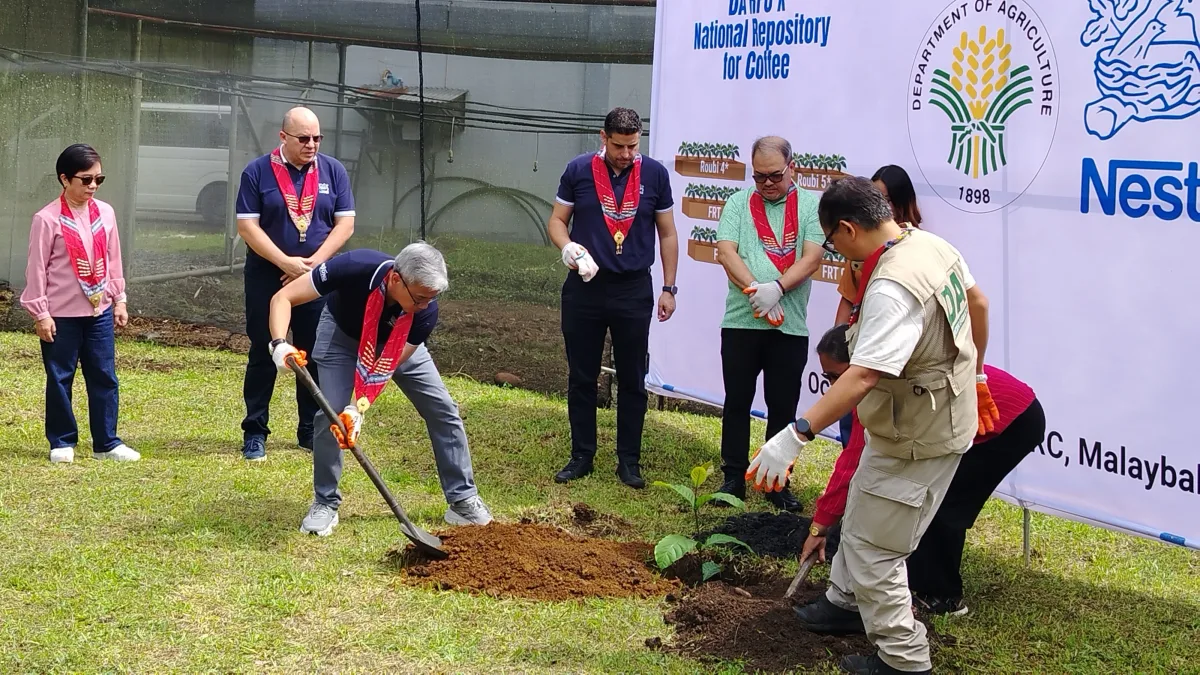
The two parties signed a memorandum of agreement on October 23 at the DA Regional Field Office 10 in Malaybalay City to strengthen coffee farming, improve yields and help farmers access quality planting materials.
The partnership under the Mindanao Integrated Coffee Development and Genetic Resource Program will focus on training farmers in regenerative agriculture, agroforestry and biodiversity, as well as preserving coffee varieties suited to local growing conditions.
For coffee farmers, the effort could mean better farming practices, more productive crops and stronger opportunities to earn from their harvests.
Nestlé Philippines Senior Vice President and Head of Corporate Affairs Jose Uy III said sustainable farming practices could help increase productivity while preparing farms for climate-related challenges.
“If we practice this, then we are setting up for improved productivity to ensure that we strengthen climate resilience and promote sustainable agriculture,” Uy said.
DA-10 Regional Director Apollo Pacamalan said the agency had mapped about 70 percent of coffee-growing areas in Bukidnon to determine what interventions farms need.
Meeting the region’s coffee demand will require expanding plantations and improving existing farms, he said.
Pacamalan said producing 25,000 metric tons of coffee would require more than 3,000 hectares of plantations, underscoring the potential to increase local production.
“There is a clear demand for us to work on, ensuring that areas identified for specific varieties of coffee are not only in Bukidnon but throughout Northern Mindanao,” he said.
Beyond increasing production, the partnership also seeks to encourage younger Filipinos to enter coffee farming as many farmers grow older.
DA Undersecretary Jerome Oliveros said the industry needs to give young people reasons to continue farming and build on the work of previous generations.
“We have to be a beacon of hope for our farmers. These are aging farmers, and the best thing for us is to leave a legacy by motivating young farmers to continue what their elders have done,” Oliveros said.
He also urged other private institutions to work with the DA on programs that support coffee farmers.
Whether the partnership can significantly reduce the region’s dependence on outside coffee supplies will depend on how effectively training, planting materials and other support translate into higher yields and more productive farms.
For Northern Mindanao’s coffee growers, the goal is not only to grow more coffee but also to make farming a more sustainable livelihood for the next generation.