OVER a hundred community-based contact tracers, who would assist in containing the coronavirus (Covid-19) infections, are set to attend today’s orientation training at the City Council session hall.
This, even as the Covid-19 Task Force here yesterday announced the city does not have a single active Covid-19 case after all four confirmed cases have recovered and five other patients had died.
On Monday, Department of Interior and Local Government (DILG) city director Jane Docallos directed all 80 barangay chairpersons to send two participants to the training, after which they may form a contact tracing team (CTT), pursuant to DILG Memorandum Circular 2020-077 dated April 24, this year.
Docallos said that to observe physical distancing, the trainees would be divided into two: 8 a.m. to 12 noon for those from semi-urban and rural barangays, and 1 p.m. to 5 p.m. for those from urban or numbered barangays.
In a memorandum, the city director said that the briefing for CTT members is intended “to ensure that (all close contacts and the Covid-19 patient) are strictly observing the home quarantine measures.”
Eventually, community-based contact tracers would also be involved in interviews of individuals who may have been diagnosed with a contagious disease and figure out those they may have in contact with.
Also, they would be tasked to convince those who have been exposed to voluntarily isolate themselves to prevent spreading the disease any further, aside from keeping City Covid-19 Task Force, through city health officer, informed.
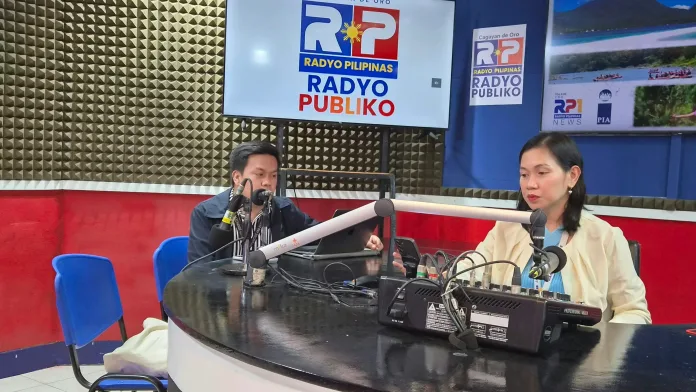
Organized by the City Covid-19 Task Force, City Health Office’s Dr. Joselito Retuya will discuss contact tracing as a time-tested public health strategy and on the crucial task of identifying close contacts of confirmed Covid-19 positive individuals.
Dr. Retuya said that the issue of confidentiality of information will also be tackled, after a video presentation.
On May 9, representatives of Cagayan de Oro City Police Office’s 10 stations also had their training on contact tracing with the city government’s resident epidemiologist.
Earlier, Dr. Jasper Kent Ola, who heads the epidemiology surveillance unit of the Department of Health 10, said that training should emphasize the need to keep an eye on “all individuals who cared for, had lived with, worked with, had traveled with, and had transacted to, with a confirmed case during the time period.”
Dr. Ola was among the guests in a forum in this city last April 30, that the Philippine Information Agency 10 organized.
Trainees in today’s contact tracing sessions are barangay officials, youth leaders, nurses, midwives, secretaries, spokespersons, health workers, development workers, nutrition scholars, law-enforcers, and health emergency responders. (Uriel C. Quilinguing)