A STUDY by the Commission on Population and Development (Popcom-10) showed that there is something more menacing than the rise of teen pregnancy in Northern Mindanao.
As if teen pregnancy is not a rising enough concern in the region, Popcom-10 Director Neil Aldrin Omega told reporters here on Wednesday, August 23, that most teen mothers in Northern Mindanao are being impregnated by persons older than them by at least five years.
“This is sexual abuse. No minor can give proper consent to sex,” Omega said.
To date, Omega said, there are 30 to 33 minors giving birth per day. That means 11,000 to 12,000 teenage mothers every month in Northern Mindanao alone, he reiterated.
Omega opined that poverty is the main reason why more minors are getting pregnant.
“Most of these teenagers come from poor families. When there are adults who offer them gifts or favors that their families could not give them, chances are they will give in to whatever that adult wants from them,” said Omega.
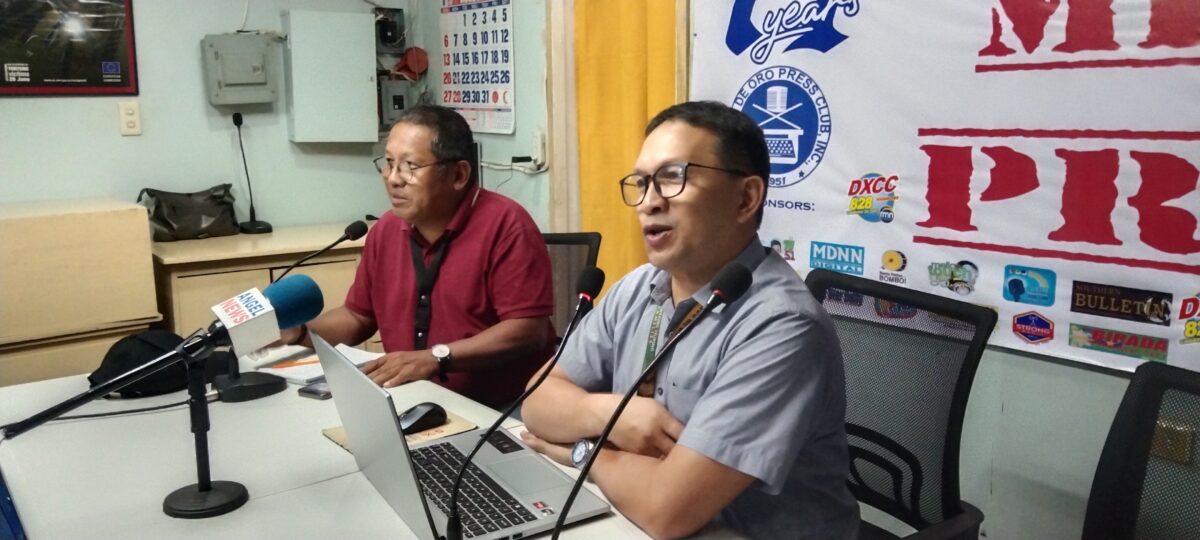
He added that Cagayan de Oro City ranked 7th among all the cities in the Philippines in teenage pregnancies.
Omega said continued education and raising awareness are still the key to reducing teenage pregnancy in the city, specifically, and Northern Mindanao, generally.
According to the National Demographic and Health Survey last year, teenage pregnancy in the region dropped by 3.8 percent from 14.7 percent compared to the same survey in 2017.
However, this figure is still the highest among all regions in the country, the survey reads in part.
In a forum held here recently by the Philippine Statistics Authority (PSA-10), Sarah Balagbis, PSA-10 chief statistical specialist, said seven percent of the teen mothers aged 15 to 19 years old gave birth successfully, four percent were pregnant at the time of the survey, while less than one percent had miscarriages.
Meanwhile, Omega said there is something inherently wrong with the pronouncements of Sen. Ronald dela Rosa on increasing the population as a way to cope with the country’s P15 trillion debt.
On August 15, dela Rosa was quoted at the briefing on the proposed 2024 National Budget as saying that it would be better if Filipinos bore more children. Pointing out that a larger population would mean the debt would be divided among more Filipinos.
“Manganak ng mas marami para yung per capita debt natin mas mababa,” dela Rosa said in the briefing.
Omega responds that a bigger population doesn’t automatically mean a better quality of living.
“We should not look at it (dela Rosa’s opinion) that way. Even if we double our population, the government’s debt will still be there,” he told reporters.
Instead, Omega said, the government should look at the Gross Domestic Product (GDP) per capita.
“This (GDP per capita) will reflect on the kind of services the government can provide its people,” Omega said.
He said the GDP per capita in the Philippines is currently at $3,400. Omega said this figure is a far cry from the GDP per capita of the country’s neighbors in Southeast Asia, citing Thailand’s $7,000 GDP per capita and Malaysia’s $8,000 GDP per capita.
“Having a smaller population can help the economy in the long run,” Omega told reporters.