NEARLY eight in ten people living in multidimensional poverty — about 887 million out of 1.1 billion globally — are directly exposed to climate hazards such as extreme heat, flooding, drought, or air pollution, according to a new United Nations Development Programme (UNDP) and Oxford Poverty and Human Development Initiative (OPHI) report released today, October 21.
The 2025 Global Multidimensional Poverty Index (MPI) report, titled “Overlapping Hardships: Poverty and Climate Hazards,” covers 109 countries and territories representing 6.3 billion people.
It provides updated poverty estimates for 13 nations, including Bangladesh, Mexico, Peru, and Niger, and presents the clearest picture yet of how the climate crisis deepens human deprivation.
“Our new research shows that to address global poverty and create a more stable world for everyone, we must confront the climate risks endangering nearly 900 million poor people,” said Haoliang Xu, UNDP acting administrator.
“When world leaders meet in Brazil for COP30 next month, their national climate pledges must revitalize the stagnating development progress that threatens to leave the world’s poorest behind.”
Poverty beyond income
The report underscores that poverty is not merely about money.
In 63 out of 105 countries where both monetary and multidimensional measures are available, the latter is higher — revealing that millions who live above the poverty line still lack basic needs such as education, healthcare, and adequate living conditions.
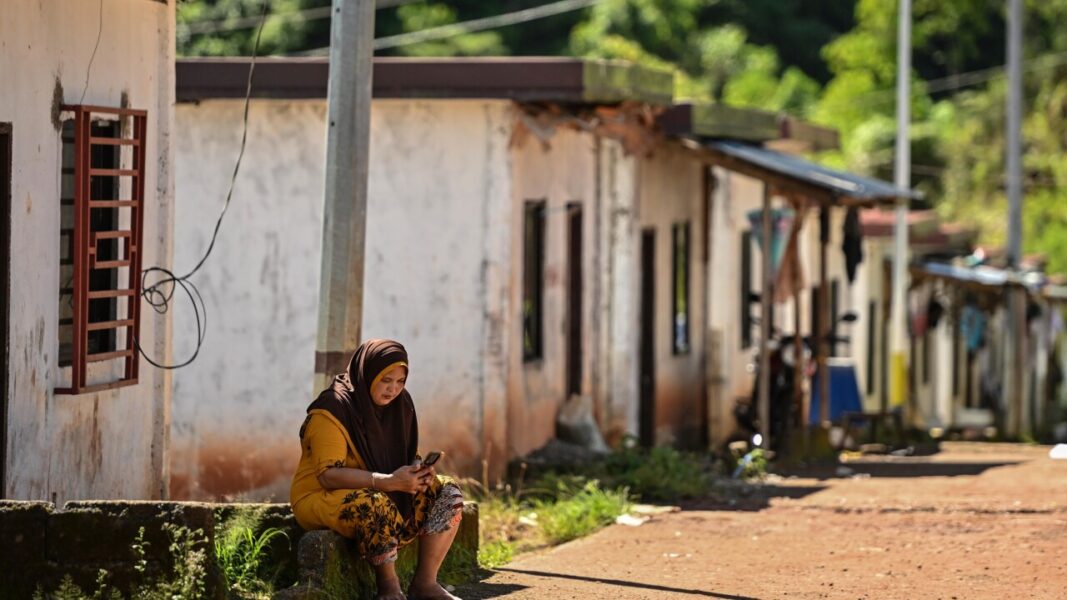
Here in the Philippines, the most recent data from 2022 show that 3.9 percent of the population (about 4.47 million people) live in multidimensional poverty, while another 5.2 percent (around 6.02 million) are considered vulnerable.
The main contributors are standard of living (42.7%), education (32.7%), and health (24.7%).
The burden of overlapping hazards
The report finds that among those living in acute multidimensional poverty — deprived in health, education, and living standards — 651 million people face two or more climate hazards, while 309 million endure three or four at once.
“This report shows where the climate crisis and poverty are notably converging,” said Sabina Alkire, director of OPHI and report co-author.
“Understanding where the planet is under greatest strain and where people face additional burdens created by climate challenges is essential to crafting strategies that put humanity at the center of climate action,” Alkire added.
The most widespread threats for the poor are high heat, affecting 608 million people, and air pollution, impacting 577 million. Flooding endangers 465 million, and 207 million live in drought-affected regions.
Global hotspots
The report identifies South Asia and Sub-Saharan Africa as the epicenters of overlapping poverty and climate risks, home to 380 million and 344 million affected people, respectively.
In South Asia, nearly 99 percent of poor people experience at least one climate hazard, and 91 percent face two or more.
Lower-middle-income countries bear the heaviest burden, with about 548 million poor people exposed to at least one climate hazard — 62 percent of the global total — and 470 million confronting multiple overlapping threats.
A future of growing inequality
“The burdens identified are not limited to the present but are expected to intensify in the future,” said Pedro Conceição, director of UNDP’s Human Development Report Office.
He pointed out that countries with the highest levels of poverty today are projected to experience the steepest temperature increases by the end of the century.
The report, released ahead of the COP30 Climate Summit in Brazil, urges world leaders to integrate poverty reduction and climate resilience into their national agendas.
“Confronting these overlapping risks requires moving from recognition to action,” the report concludes, calling for climate-resilient development, stronger local adaptation systems, and expanded global cooperation to protect the world’s most vulnerable populations.