By NITZ ARANCONCorrespondent
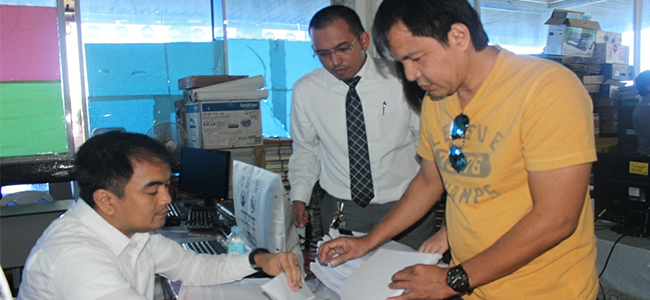
CITY Prosecutor’s Office administrative aide and alleged case fixer Genard Abejo yesterday pressed charges against the police and prosecutors in an apparent attempt to prevent the use of data retrieved from his seized cellphones as evidence against him.
Abejo, arrested during an entrapment, and then charged with graft and extortion/robbery last month, filed the complaint for violation of the Data Privacy Act of 2012 against regional state prosecutor Jaime Umpa, assistant regional state prosecutor Irene Meso, acting city prosecutor Merlyn Uy, Chief Insp. Melgar Devaras of the Criminal Investigation and Detection Group (CIDG) here, Chief Insp. Berlito de Guzman, and PO1 Jun Raagas of the Anti-Cyber Crime Group.
Abejo’s daughter Stephanie Dawn is also a complainant against the prosecutors and police officers.
The complaint was filed at the City Prosecutor’s Office at around 9:15 am yesterday.
The Abejos also filed a petition in court for the issuance of a writ of habeas data against the prosecutors and the police.
In the 12-page petition, the Abejos sought to stop the respondents from transcribing and reproducing the data from the Subscriber Identity Module (SIM) cards of Abejo’s confiscated cellphones.
Police and prosecutors were planning to use the cellphone data as evidence in the graft and extortion/robbery cases against Abejo. The petition for a writ, if granted, could spoil that plan, and efforts to bring alleged corrupt prosecutors to justice.
Abejo was arrested in a CIDG entrapment in a convenience store at a gasoline station in Gusa in Nov. 11. Police said he received money from women in exchange for the dismissal of complaints against their children, an allegation Anejo denied.
Abejo’s lawyer Jose Alejandro Pallugna said the CIDG seized from Abejo two cellphones with four sim cards, and these were brought to the Cyber Crime Group of the police for digital forensic examination.
Pallugna said some 500 text messages were found, transcribed, reprinted, and given by the police to prosecutors and reporters.
“Ang mga text messages or data sa sim card ni Genard, gipistahan sa daghang mga tawo, lakip media, kay gipang-distribute man niining mga respondent ang hard copy sa maong text messages,” Pallugna said.
He argued that the text messages were private communication.
Pallugna said they also filed a petition for a writ of habeas data to stop the continued production and distribution of copies of data from the two mobile phones and four sim cards seized from the Abejo.
The petition seeks a court order to destroy any of the existing copies of the retrieved data, including soft copies.
The petitioners also sought a list of people who received copies of the data so that they too may be commanded to destroy their copies, and enjoin them from presenting the data as evidence.