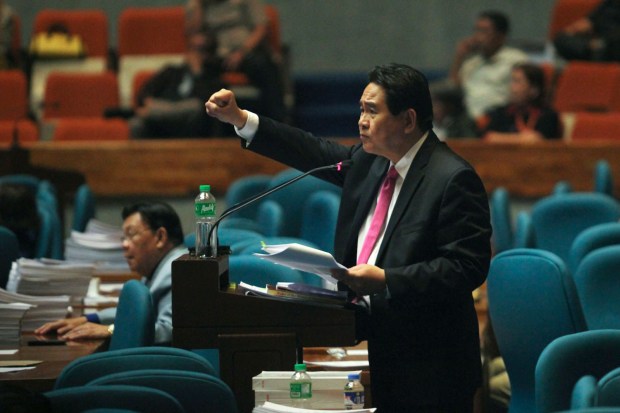
AMID controversies surrounding the Department of Budget and Management’s (DBM) purchase of COVID-19 supplies, Cagayan de Oro Rep. Rufus Rodriguez has filed a bill seeking to abolish the “procurement service” of the agency.
The PS-DBM is the government's procurement arm, which has been the late subject of investigations in Congress, according to Rodriguez.
House Bill 10222 also mandates national government agencies, including state-owned or controlled corporations, colleges and universities, and local governments to handle their own procurement of supplies after the PS-DBM, a body created in the Marcos era, is abolished.
In seeking the scrapping of the DBM’s procurement arm, House deputy speaker Rodriguez said the office has faced “many issues and controversies.
The most recent of which was the transfer of P42 billion by the Department of Health for face shields, face masks, personal protective equipment, and other Covid-19 pandemic-related purchases, according to Rodriguez.
“The PS-DBM has also been hounded by allegations of improper procedure and overpriced acquisitions,” he said.
He said the 1987 Constitution, which directs the state to “maintain honesty and integrity in the public service and to take positive and effective measures against graft and corruption,” and Republic Act No. 9184, or the Government Procurement Reform Act, have made the PS-DBM irrelevant and redundant.
Rodriguez added that the budget department’s procurement arm was created to take advantage of economies of scale by handling purchases of common-use supplies and equipment.
“However, the passage of RA 9184 undermines the mandate of the PS-DBM through the inclusion of relevant provisions that strengthen the procurement service of national government agencies,” said Rodriguez.
He pointed out that one such provision is the creation of the Government Procurement Policy Board and the bids and awards committee (BAC) in each agency.
One of the tasks of the board is to strengthen the BACs by ensuring “that procuring entities regularly conduct procurement training programs and prepare a procurement operation manual for all offices and agencies of the government,” he said.
Under Bill 10222, affected PS-DBM personnel would be paid separation and retirement benefits under existing laws.
He also said that funds transferred or advanced by agencies to PS-DBM would revert back to the national treasury.
There would be a transition period of one year, during which the budget department’s procurement arm would make an inventory of purchased supplies and deliver these to agencies.
“No further procurement by PS-DBM would be allowed,” Rodriguez said.
The proposed law would take effect 15 days after its publication in the Official Gazette or a newspaper of general circulation. (Ben Balce)