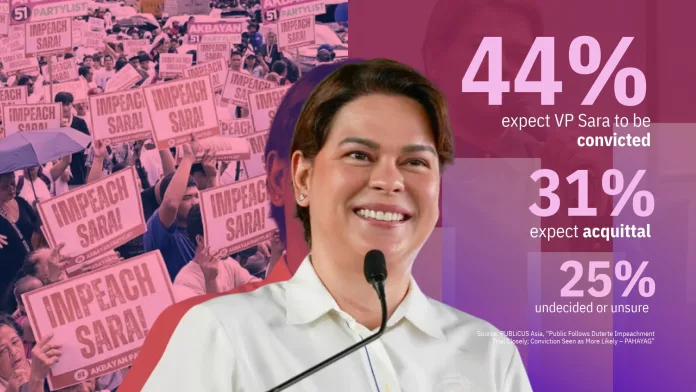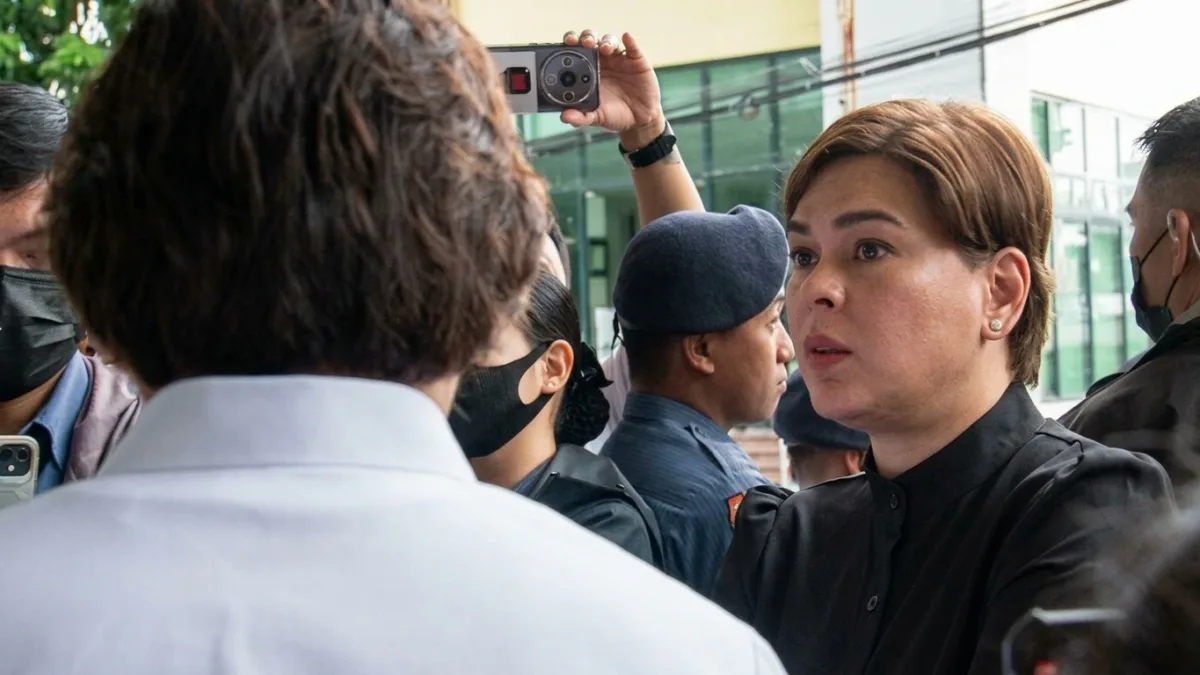
CAGAYAN de Oro City — Vice President Sara Duterte has posted ₱120,000 bail for each of the three counts of grave threats, or ₱360,000 in total, after a Quezon City court issued a warrant for her arrest.
But beyond the bail is a bigger constitutional question raised by her legal camp: Can a sitting Vice President be criminally prosecuted for alleged acts that are also being cited as grounds for impeachment?
Atty. Anthony Ludalvi Vista argues that criminal proceedings should not proceed while Duterte remains in office, citing the Supreme Court’s 2025 ruling in Sara Z. Duterte v. House of Representatives, which recognized “limited procedural immunity” for impeachable public officers while in office.
Vista maintains that the protection covers the Vice President and may require proceedings involving the same acts to be deferred or stopped—not because the Vice President is immune from criminal liability, but because the Constitution protects the impeachment process.
The Supreme Court said the limited immunity is intended to prevent disruption of government functions and protect separation of powers and institutional independence, while distinguishing impeachment from criminal liability.
Vista’s interpretation has drawn legal assessments from former NLRC commissioner Atty. Proculo Sarmen, former Chief Presidential Legal Counsel Atty. Salvador Panelo and labor leader Atty. Sonny Matula.
Sarmen: Vista has substantial legal basis
Sarmen said Vista’s argument has substantial legal basis, pointing to the Supreme Court’s July 25, 2025 ruling in Sara Z. Duterte v. House of Representatives, G.R. Nos. 278353 and 278359.
The ruling discussed the “limited procedural immunity” of impeachable officers while they remain in office.
But Sarmen stressed that the protection should not be interpreted as absolute immunity from criminal liability.
He noted that the immunity issue was not the principal question directly decided by the Supreme Court in that case, which dealt with impeachment proceedings rather than a criminal prosecution.
The arrest warrant, therefore, remains enforceable unless it is stayed, recalled or quashed by the proper court.
Sarmen said the Supreme Court may ultimately have to clarify whether the procedural protection recognized in the 2025 ruling fully applies to a sitting Vice President.
For Sarmen, the issue should be resolved objectively under the Constitution, rather than through partisan politics, while respecting accountability, due process and Duterte’s presumption of innocence.
Panelo: Immunity rationale should extend to VP
Panelo takes a broader position.
The former Chief Presidential Legal Counsel argues that the rationale behind presidential immunity from suit should also extend to Vice President Duterte while she remains in office.
He also points to what he describes as a possible “constitutional incongruity” because the grave-threats allegations are also tied to Article 4 of the impeachment case being heard by the Senate sitting as an impeachment court.
The question, under Panelo’s view, is whether the same alleged conduct can simultaneously serve as an impeachment ground and be pursued as a criminal case while the official remains in office.
His position supports the broader defense argument that the constitutional protections surrounding an impeachable office must be considered before criminal proceedings involving the same acts are allowed to proceed.
Matula: Strong point, but not a bullseye
For Atty. Sonny Matula, labor leader and president of the Federation of Free Workers, Vista’s position has a “strong and legitimate legal point.”
Matula likewise points to the Supreme Court’s 2025 ruling and its recognition of limited procedural immunity for impeachable officers.
But he cautions against treating the ruling as a definitive answer.
The case dealt with impeachment, not criminal prosecution, Matula noted. The Court’s discussion of immunity could therefore arguably be considered obiter dictum—a judicial observation that was not essential to resolving the case—although it remains a significant pronouncement from the Supreme Court.
Matula also points to U.S. jurisprudence that could support the opposite position.
In Trump v. United States, the U.S. Supreme Court held that impeachment and Senate conviction are not prerequisites to criminal prosecution. United States v. Nixon and Trump v. Vance likewise rejected claims of absolute immunity from criminal judicial process.
But Matula stresses an important distinction: U.S. presidential immunity jurisprudence largely concerns the unique constitutional powers of the presidency. It does not establish blanket criminal immunity for a sitting U.S. Vice President simply because the office is impeachable.
What the public should watch
The legal dispute therefore goes beyond Duterte’s ₱360,000 total bail.
The issuance of the warrant and a court’s finding of probable cause do not amount to a finding of guilt. Duterte remains entitled to due process and the presumption of innocence as the criminal case moves forward.
The three grave-threats charges stem from her November 2024 remarks involving President Ferdinand Marcos Jr., First Lady Liza Araneta-Marcos and then-House Speaker Martin Romualdez. Duterte has denied threatening them.
Her posting of bail also does not resolve the constitutional question raised by her defense.
At its core, the dispute is whether the Constitution’s protection of impeachable officials can prevent criminal proceedings from moving forward while an official remains in office—particularly when the alleged acts are also part of an impeachment case.
Sarmen sees substantial legal basis for Vista’s position but not absolute immunity.
Panelo argues that the rationale behind presidential immunity should extend to the Vice President.
Matula sees merit in Vista’s argument but cautions that the Supreme Court’s 2025 ruling may not be the final word.
For the public, the answer could help define the boundary between accountability, impeachment and criminal prosecution.
Ultimately, that constitutional question must be settled by the courts—not by political camps.