CAGAYAN de Oro takes center stage as it parades one of three old replicas of the life-sized, dark-hued, wooden sculpture of the Black Nazarene today, the way it was done before the Covid-19 pandemic times.
Cagayan de Oro will be the only city to stage the Traslacion, an annual procession to reenact the late 18th-century transfer of the religious icon from its original shrine in Intramuros to the Quiapo Church.
But here, it will be a day for Black Nazarene devotees to celebrate the arrival of one of the Callejeros, or replica pilgrim image, in the city.
“It’s a day of remembrance of the transfer,” said Monsignor Rey Monsanto, a member of the archdiocese’s Presbyterian council who served as the parish priest of the city’s Nazareno Parish Church when the city first saw the third of the three Callejeros.
Monsanto, now the parish priest of the Our Lady of Fatima Church in Barangay Camaman-an, is among those responsible for bringing in one of the copies of the 17th-century mulatto image of a kneeling and cross-bearing Jesus Christ to the city that has been attracting thousands of Black Nazarene devotees all over Mindanao each year since 2009.
It was Monsanto who asked the Quiapo Church to lend the city’s Roman Catholic archdiocese one of the replicas in time for the jubilee year celebration at the city’s Nazareno parish.
Rather than lend it, the Minor Basilica in Quiapo decided to give one of the pilgrim images.
“The priest in charge of the replicas said he had a dream, and then he decided to give one of the replicas to us instead,” recalled Monsanto.
On the morning of January 5, 2009, one of the pilgrim images of the Black Nazarene arrived in Cagayan de Oro City and was brought directly to the Saint Augustine Metropolitan Cathedral, four days ahead of the first January 9 Black Nazarene procession in Mindanao.
Since then, Northern Mindanao’s capital city has been the center for the Black Nazarene devotion in the southern Philippines.
The religious icon, believed to be miraculous by its millions of religious devotees, was carved by an anonymous sculptor in Mexico and was brought to Manila via galleon by Augustinian Recollect missionaries on May 31, 1606.
With Manila canceling the annual Traslacion in Quiapo due to the persistent Covid-19 pandemic, Cagayan de Oro will be the only city to stage a grand procession of the Black Nazarene, the first time in two years since the government imposed strict health restrictions to keep the deadly virus from spreading further.
Cagayan de Oro Mayor Rolando Uy issued Executive Order 159-2022 for a temporary traffic scheme in the city where thousands are expected to congregate again because of the Traslacion today.
The temporary traffic scheme would be in effect from last Sunday night until today.
Several roads around the cathedral and the Nazareno church, and in downtown Cagayan de Oro have been ordered closed to vehicular traffic during the period in anticipation of a large crowd during the early morning procession this morning.
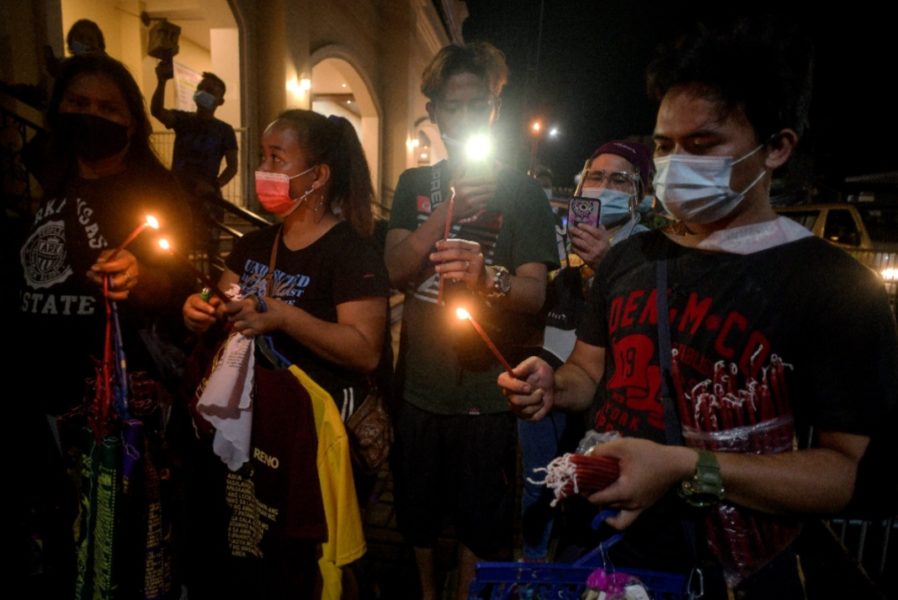
“This year’s celebration of the Feast of the Black Nazarene on January 9 will go face-to-face, provided that minimum public health standards and other safety protocols are observed,” a public advisory released by city hall read in part.
Cagayan de Oro City health officer Dr. Rachel Dilla said last Friday that city hall would deploy health workers to require procession participants to wear face masks and observe minimum public health standards.
“We strongly discourage those who have flu-like illnesses from joining the procession. This is for their health,” said Dilla.